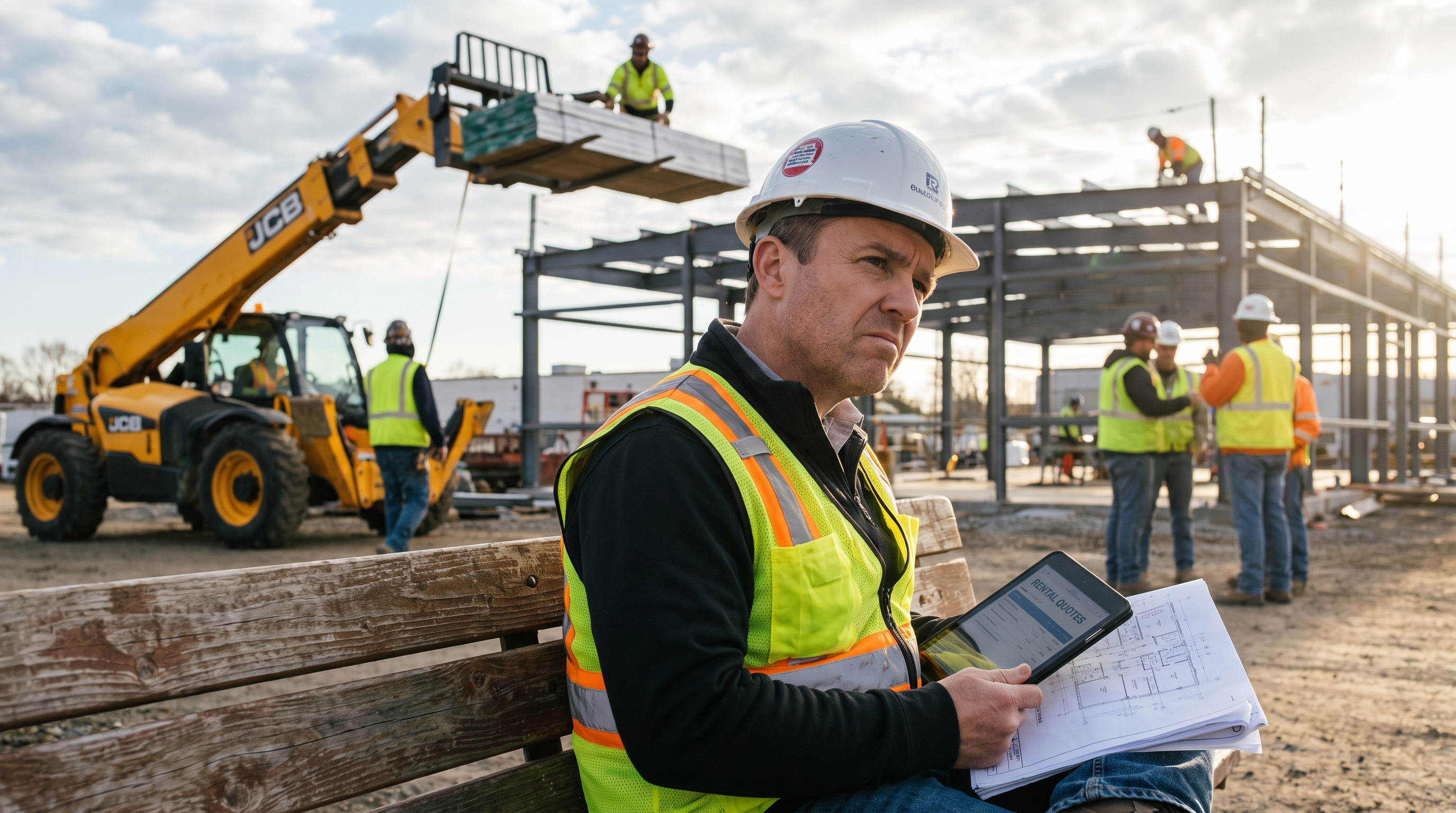
"Rent the right telehandler the first time. Learn how load charts, operator certification, and hidden delivery and protection fees change your real cost."
Related reading: Choosing Between a Scissor Lift and a Boom Lift for Your 2026 Project, How to Rent the Right Lift for Warehouse Security Camera Installation, and How to Streamline Equipment Procurement for Multiple Job Sites Without Managing Separate Rental Agreements.


Get the latest GoDizel content delivered straight to your inbox
Struggling to choose between a scissor lift and a boom lift? Learn the key differences to pick the perfect aerial lift for your 2026 construction project.
Learn how to rent the right lift for warehouse security camera installation in 2026. Compare scissor and boom lifts to meet OSHA safety requirements.
Quick answer: A telehandler rental typically costs $300–$700 per day for the base rate, but delivery, pickup, fuel, environmental fees, and a rental protection plan routinely push the real total 40–60% higher. To rent the right machine, calculate your required capacity at maximum reach and height together using the load chart, confirm your operator holds rough-terrain (Class 7) certification under OSHA 29 CFR 1910.178, and get all-in pricing in writing before you sign.
The rated capacity on a spec sheet only applies with the boom fully retracted. At full extension, a 12,000 lb machine may safely lift a third of that.
Warehouse forklift certification does not cover telehandlers. Operators need Class 7 rough-terrain training plus a site-specific evaluation.
OSHA’s 2026 maximum penalty is $16,550 per serious violation and $165,514 per willful or repeat violation, and the contractor — not the rental yard — carries that exposure.
The daily rate is rarely the final number. Delivery and pickup alone can add $300–$800 per rental.
Renting the wrong telehandler doesn’t just slow a project down. It drains the budget through fees, delays, and decisions made without complete information.
Here’s how it usually goes. You call the first yard, and they’re out of stock. The second has a unit and quotes a daily rate that sounds fine — until delivery, a fuel surcharge, and a damage waiver show up on the invoice. By the third call, you’re deciding under time pressure with half the data you need.
Misleading base rates are one of the most consistent pain points in equipment procurement. A $400/day quote can climb past $650/day once delivery, pickup, and protection fees are added, and none of those appear in the first number you hear. That gap isn’t an accident; it’s a structural feature of a market built around phone-based negotiation.
The cost isn’t only financial. Equipment confirmations that should take minutes stretch into hours, and that lag compounds: a late equipment decision pushes the crew’s start time, which pushes the pour, which pushes inspection.
Digital rental marketplaces now surface real-time availability and full-cost pricing before you commit. But picking the right machine still depends on understanding the numbers behind it, starting with how capacity and reach interact on the load chart.
The capacity printed on a spec sheet is a best-case figure, achieved only with the boom fully retracted and the load close to the machine.
Extend the boom and the rated capacity drops, sometimes dramatically. A telehandler rated at 12,000 lbs at zero extension might safely handle 4,000 lbs or less at full horizontal reach. Renting off the headline number is how job sites end up with a machine that technically can’t do the job it was rented for.
Every telehandler ships with a load chart that plots capacity against reach and lift height at the same time. Before you sign a rental agreement, check these four variables against it:
Horizontal reach — how far the boom extends beyond the machine’s front tires (or outriggers, if equipped)
Lift height — the vertical distance to the placement point, not the maximum boom height
Load weight — the actual weight of the material, including pallet and packaging, not an estimate
Attachment type — forks, jib, truss boom, or bucket each have their own chart and reduce effective capacity differently
Safety rule: Calculate required capacity at the maximum reach and height your job needs simultaneously — never separately. Lift height alone tells you less than half the story.
A machine that clears the required height but falls short on capacity at that elevation is no better than one that can’t reach at all. And the instinct to “rent up” to a bigger machine just to feel safe adds cost — a higher day rate, a heavier delivery charge, and sometimes a unit that won’t fit the site — without guaranteeing the right fit. Match the chart to the lift, then choose the smallest machine that does the job with margin.
Once you understand the chart, the next question is which brands deliver that capacity reliably in the field.
The brand you end up with shapes everything from operator confidence to how well the machine fits the rest of your fleet. These are the three you’ll see most often in rental fleets, and each has a distinct profile.
JLG is known for high-reach performance and structural stability under sustained load. Its boom systems are well regarded for consistency at extended heights, which matters when you’re placing materials on upper floors or over obstacles where flex causes real problems. JLG also has strong parts availability, which keeps downtime short when something needs attention.
Genie leans toward operator-friendly controls and a shorter learning curve. On mixed crews where operators rotate across equipment, that ease of use translates to fewer mistakes and faster task completion.
Caterpillar offers ecosystem integration. If your site already runs Cat dozers, compactors, or excavators, shared telematics and familiar control logic reduce the friction of adding one more machine.
Practical reality: in a tight rental market, fleet availability often overrides brand preference. The right machine is frequently whichever well-maintained unit your rental partner can deliver on time. Knowing each brand’s strengths means you understand the trade-off you’re accepting and can adjust the site plan instead of getting caught off guard.
Once the machine is locked in, the next variable is who’s operating it and whether they’re certified to.
Skipping operator certification isn’t just a compliance gap. It’s the fastest way to turn a telehandler rental into a six-figure liability.
Telehandlers are powered industrial trucks under OSHA 29 CFR 1910.178, and construction sites are pointed to the same training requirements through 29 CFR 1926.602(d). Specifically, telehandlers are Class 7 rough-terrain forklifts, governed by the ANSI/ITSDF B56.6 design and operation standard. That classification matters more than most project managers realize before the machine shows up.
General forklift certification does not transfer. An operator certified on a warehouse counterbalance lift hasn’t been trained on the dynamic load shifts that happen when a boom extends. Capacity vs. reach isn’t a spec-sheet conversation; it’s an active variable that changes with every foot of extension. OSHA requires formal instruction, practical hands-on training, and an evaluation of the operator on the specific type of truck and in the actual workplace conditions — not just a classroom certificate — plus re-evaluation at least every three years.
Before every shift, require a documented daily inspection covering:
Hydraulics — check for leaks at every boom and attachment connection point
Load chart — confirm the chart in the cab matches the attachment currently installed
Tires — condition and inflation, which is especially critical on uneven terrain where stability margins shrink fast
Safety devices — test the seatbelt interlock, horn, backup alarm, and load moment indicator before the first lift
Uncertified operators create direct liability exposure for the contractor, not the rental provider. OSHA’s 2026 maximum penalties are $16,550 per serious or other-than-serious violation and $165,514 per willful or repeat violation, before any civil exposure from an injury claim.
With safety obligations covered, scrutinize the invoice itself, because the daily rate is rarely the final number.
A rental quote that looks affordable on Monday can turn into a budget problem by Friday. The gap comes down to a handful of line items most contractors don’t examine until it’s too late.
Delivery and pickup. The most common surprise. Depending on distance and machine size, expect $300–$800 or more per rental. Some suppliers quote delivery one way only, leaving you to negotiate the return haul separately, often at a premium. Ask for round-trip transport in writing.
Environmental and fuel fees. Environmental fees cover fluid disposal and regulatory compliance and are usually non-negotiable. Fuel refill penalties are avoidable: return the machine at the agreed fuel level and photograph the gauge at pickup and return.
Rental Protection Plans (RPP). Typically 10–15% of the rental rate, an RPP is convenient but often costs more than extending your existing commercial general liability or inland marine equipment coverage. Check with your insurance broker before defaulting to the RPP.
Overtime and metered hours. Many daily rates assume an 8-hour day, 40-hour week, or 160-hour month. Run a double shift and the meter charges can exceed the base rate.
The cleaner alternative is all-in pricing from the start. Dizel shows the full rental price, including delivery and protection fees, before you commit, which removes the guesswork that derails project budgets. On most heavy equipment rental marketplaces that transparency isn’t the norm, but it should be your baseline expectation.
Renting the wrong telehandler quietly drains the budget through idle time, re-rentals, compliance fines, and surprise charges. Here’s the order of operations that avoids all four:
Calculate reach-to-capacity first. Before comparing brands or calling a yard, know your maximum lift height, horizontal reach, and actual load weight. A machine that can’t reach the target or tips out before it gets there costs a full re-rental day plus a second delivery fee.
Use a digital marketplace to compress the search. Comparing JLG, Genie, and Cat units across yards used to mean a morning of phone calls. On Dizel you can filter 4,000+ machines by spec, location, and availability in under a minute, before committing to anything.
Verify operator certification before the machine arrives. Class 7 rough-terrain certification plus a site-specific evaluation, documented. No rental agreement will shield you from that liability.
Get all-in pricing in writing. A daily rate without delivery, pickup, fuel, environmental, and protection line items is an incomplete number.
The contractors who control project costs don’t just rent smarter. They source smarter, and that starts with the right information in the right order.
The hidden costs covered above, from mismatched lift capacity to certification gaps, don’t disappear on their own. They do get much easier to avoid when you can see the full picture before you commit.
Manual procurement hasn’t kept pace with the complexity of modern job sites. Calling through a list of yards to compare rates, availability, and specs takes time the schedule doesn’t have, and incomplete information produces incomplete decisions.
Dizel changes that. Its AI-driven checkout is built for the specifics of complex equipment rentals, matching lift height, capacity, and attachment requirements to available inventory so you’re not guessing. You can see the real rental price before making a single call, which narrows the gap between quote and invoice.
Managing multiple rentals through one interface also removes the coordination friction of multi-phase projects. Vendor contacts, contract terms, delivery windows, and equipment specs live in one place instead of across separate conversations and paper trails.
Moving from yard calls to digital procurement isn’t about replacing relationships with rental providers. It’s about arriving at those conversations prepared: you already know what you need, what it should cost, and what compliance documentation to request. That’s how you protect budget and timeline from the first day of the rental to the last.
How much does it cost to rent a telehandler?
Base daily rates typically run $300–$700 depending on lift height and capacity, with weekly rates around 3× daily and monthly rates around 8–10× daily. Delivery, pickup, fuel, environmental fees, and a protection plan commonly add 40–60% to the base rate, so always compare all-in quotes.
Do you need a certification to operate a rented telehandler?
Yes. Under OSHA 29 CFR 1910.178(l), operators must complete formal and practical training plus a workplace evaluation on the specific class of truck. Telehandlers are Class 7 rough-terrain forklifts; a standard warehouse forklift certification does not satisfy the requirement.
What size telehandler do I need?
Determine the heaviest load you’ll lift and the farthest point (reach and height together) you’ll place it, then check the manufacturer’s load chart for that attachment. Choose the smallest machine whose chart covers that point with margin. Common rental sizes are 5,000–6,000 lb / 19–42 ft and 8,000–12,000 lb / 42–56 ft.
Who is liable if a rented telehandler is involved in an accident?
The employer of the operator carries OSHA liability for training and safe operation. Equipment damage is governed by the rental agreement and either a Rental Protection Plan or the contractor’s own insurance.
JLG vs. Genie telehandler: which is better for rental?
JLG is generally favored for high-reach stability and parts availability; Genie for intuitive controls and short operator learning curves. In practice, availability and machine condition matter more than brand for most jobs.
ANSI/ITSDF B56.6 — Safety Standard for Rough Terrain Forklift Trucks

