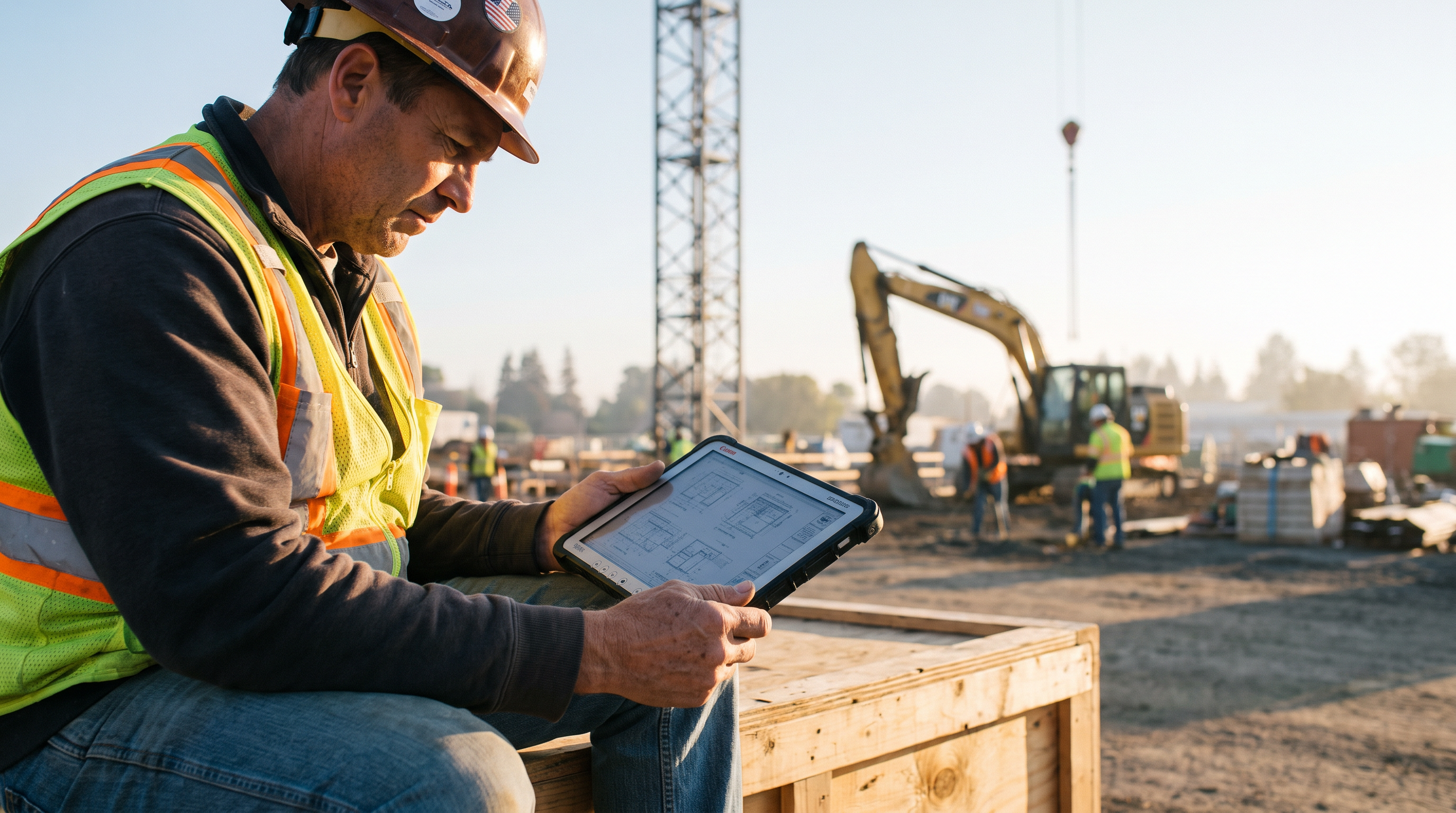
"Streamline your projects with our guide on how to rent heavy equipment online. Learn to compare prices and schedule reliable job site delivery for your fleet."
Related reading: Choosing Between a Scissor Lift and a Boom Lift for Your 2026 Project, How to Rent the Right Lift for Warehouse Security Camera Installation, and How to Streamline Equipment Procurement for Multiple Job Sites Without Managing Separate Rental Agreements.


Get the latest GoDizel content delivered straight to your inbox
Struggling to choose between a scissor lift and a boom lift? Learn the key differences to pick the perfect aerial lift for your 2026 construction project.
Learn how to rent the right lift for warehouse security camera installation in 2026. Compare scissor and boom lifts to meet OSHA safety requirements.
Getting construction equipment rental with delivery right starts well before you submit a booking request. A mismatched machine or an inaccessible drop point doesn't just delay your project — it generates standby charges and rescheduling headaches that eat directly into margin. Work through this checklist before you open any rental platform.
Pre-Rental Site Readiness Checklist:
Machine specs: Nail down lift capacity, operating weight, reach, and fuel type. A 6,000 lb lift rating sounds adequate until the load plan says otherwise.
Site access for delivery trailers: Measure overhead clearance, gate width, and confirm soil stability on the approach path. Soft ground can trap a lowboy before it ever unloads.
Rental window: Define start and end dates with a one-day buffer. Vague timelines convert into standby fees fast.
Operator certification: Verify your crew meets requirements under OSHA 29 CFR 1926 for the equipment class you're renting. Certain machines — telehandlers, aerial lifts — carry specific operator training mandates.
OSHA compliance is mandatory. Confirm certification before the equipment arrives, not after.
Once your specs and logistics are locked, the procurement process becomes significantly faster. GoDizel platform is built for exactly this moment — when you know what you need and want to compare real availability and all-in pricing without wading through a call queue. Next, you'll see how to use a digital marketplace to put that pricing in front of you in minutes.
Once you've locked in your specs and site logistics, the next move is figuring out how to rent heavy equipment online without getting surprised by hidden costs at checkout. A digital marketplace cuts through that friction fast — but only if you use it correctly.
Follow these steps to get a clean, comparable price and confirm real availability before you commit:
Enter your job site zip code first. Filter results by local availability so you're only seeing machines that can realistically reach your delivery job site within your timeline. Distance directly affects delivery cost and turnaround.
Read the all-in price — not just the day rate. Analyze what's bundled: delivery, pickup, environmental fees, and fuel surcharges. A low headline rate that excludes these can run $300–$600 higher once you reach checkout.
Use spec filters to compare brands side by side. When you need to rent heavy equipment across multiple bids, AI-driven filters let you stack Cat, Deere, and Komatsu models against each other by operating weight, lift capacity, or reach — apples to apples.
Verify real-time availability. Confirm the unit is actually in stock at a nearby yard. Listings without live inventory data are a common source of bait-and-switch delays that stall job site schedules.
It's worth noting that this shift toward tech-enabled platforms is accelerating across the industry — EquipmentShare's rental segment revenue grew significantly in 2023, a clear sign contractors are moving their procurement decisions online. With accurate pricing and real inventory in front of you, you're ready to move to the booking step — where compliance paperwork and delivery coordination come together.
Once you've found the right machine at the right price on an online heavy machinery marketplace, the checkout process is where most contractors either lock in a smooth rental or create headaches for themselves later. Get these steps right and your heavy equipment shows up on time, compliant, and ready to work.
Upload your Certificate of Insurance (COI) before submitting the booking. Most rental providers require general liability coverage of at least $1,000,000 per occurrence, with the rental company listed as an additional insured party. Have your broker send an updated COI that reflects those limits — a generic policy document won't clear compliance review.
Select delivery and pickup windows that match your site foreman's actual schedule, not just a convenient time slot. If your foreman isn't on site to receive the machine, you risk a missed delivery, a rescheduling fee, or equipment left unattended.
Provide specific drop-off instructions in the delivery notes field. "Gate 3, North side, call foreman upon arrival" is far more useful than a street address alone — especially on a busy job site with multiple access points.
Review overtime hour rates in the rental agreement before you sign. Many agreements include a daily engine-hour limit (often 8–10 hours); exceeding it triggers per-hour overtime charges that can quietly inflate your final invoice.
Pro-Tip — COI Verification: Don't wait until checkout to request your COI. Contact your insurance broker at least 24 hours before booking so there's no delay holding up your delivery window.
With your booking confirmed and compliance documents submitted, the next critical moment is when that truck actually pulls onto your job site — and what you do in the first 15 minutes of delivery can protect you from disputes down the road.
Booking equipment online is only half the job. What happens when the machine rolls off the truck determines whether your rent agreement protects you — or exposes you to disputed damage charges. As Construction Logistics Review notes, "the delivery phase is where most disputes occur; documenting the machine's condition at the moment of drop-off is the contractor's best insurance." Follow this sequence every time, regardless of how tight the morning schedule is.
Conduct a full walk-around with the delivery driver present before they leave the site. Don't skip this step — once the truck pulls away, you own any damage that wasn't flagged.
Photograph all existing damage — scratches, dents, cracked glass, worn decals — and timestamp those images before you sign the bill of lading. This is your primary protection against end-of-rental disputes.
Verify fluid levels (hydraulic, engine oil, coolant) and record the hour meter reading. Note both on the delivery paperwork so your heavy equipment rental price comparison math holds up at return time.
Cross-check the delivered model against what you booked when sourcing equipment online. Model variants can have meaningfully different control layouts, rated capacities, or attachment configurations.
Brief the operator on the specific controls of this unit before work begins. Even experienced operators should walk through any unfamiliar panel — OSHA standard 29 CFR 1926 mandates that operators are trained on the specific equipment they run, not just the equipment class.
Retain all delivery documentation in your project file. If a billing question surfaces later, that paperwork is what resolves it cleanly.
Getting this sequence right at delivery sets up the back half of the rental — pickup, final billing, and overall ROI — for a smooth close.
Renting heavy equipment online with job site delivery isn't just a convenience upgrade — it's a structural improvement to how your operation runs. Every step in this guide builds toward one outcome: less time chasing equipment, more time using it.
Apply these takeaways on your next rental:
Cut procurement time dramatically. Searching for "construction equipment rental near me" used to mean phone calls, hold times, and manual price comparisons. A digital marketplace compresses that process from hours to minutes — filter by spec, location, and availability in a single session.
Demand all-in pricing upfront. Budget creep almost always traces back to delivery surcharges added at checkout or invoicing. When you book online with transparent, all-in pricing, what you see is what you pay.
Centralize your fleet view. If you're managing multiple job sites, a single dashboard tracking every active rental — machine type, location, return date — eliminates the coordination overhead that eats project margin.
Automate your pickup requests. Forgotten heavy equipment sitting idle on a job site is a direct fee liability. Use automated pickup scheduling the moment a machine's work is complete.
The platforms that lead on operational efficiency and tech integration do so because process discipline compounds over time. Build the same discipline into your rental workflow. Start your next search on Dizel — find the right machine, confirm delivery, and get back to work.

