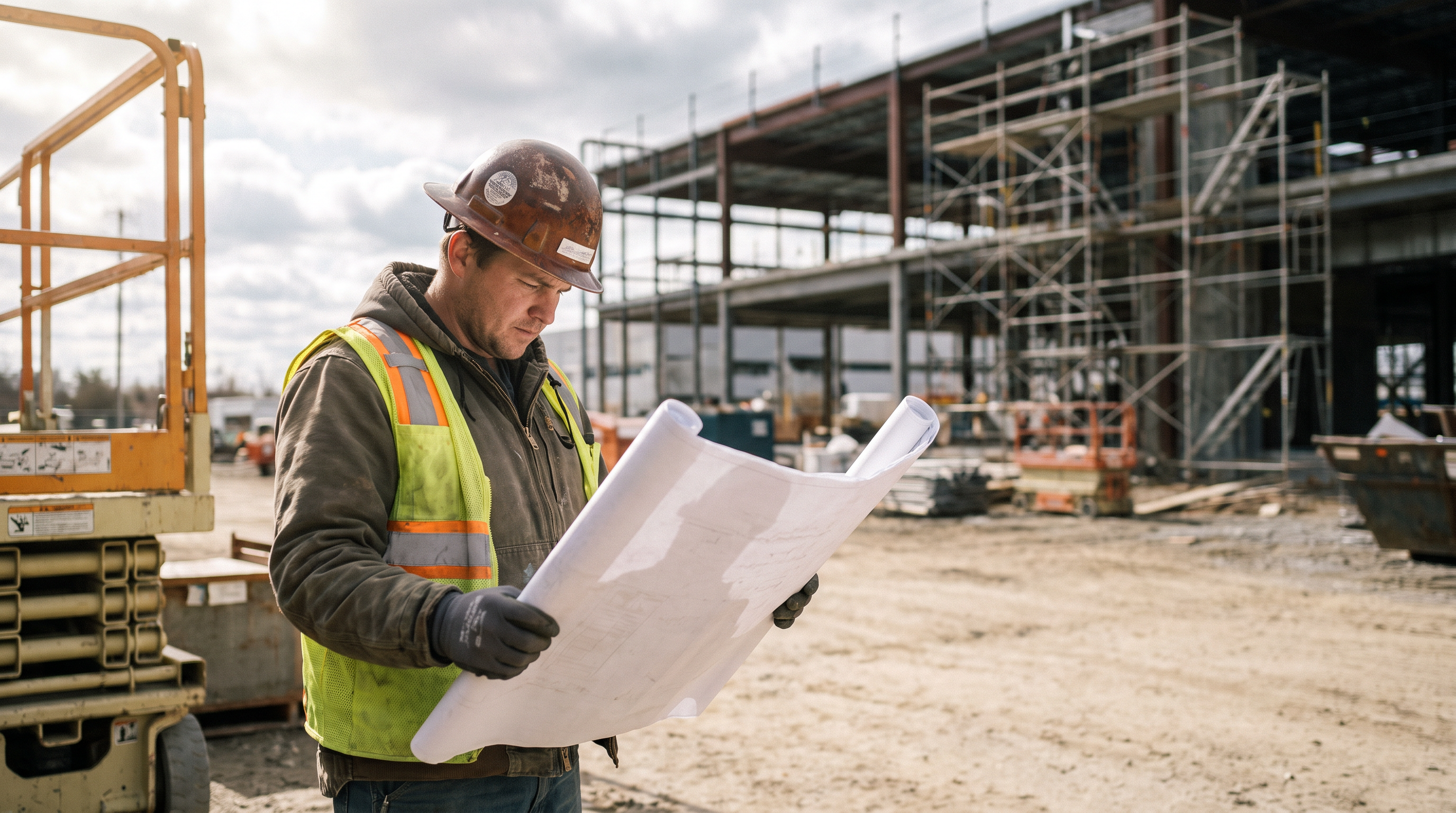
"Need to rent a scissor lift? Learn how to choose between electric and rough terrain models to save time and money on your next project. Find the right lift toda"
Related reading: How to Streamline Equipment Procurement for Multiple Job Sites Without Managing Separate Rental Agreements, How to Rent Storm Cleanup Equipment After a Hurricane in 2026, and How to Rent and Set a Commercial Generator in 5 Steps.


Get the latest GoDizel content delivered straight to your inbox
Learn how to consolidate equipment procurement across multiple job sites. Stop managing separate rental agreements and optimize your fleet management today.
Learn how to rent storm cleanup equipment effectively in 2026. Follow our guide to secure essential restoration tools and prevent long-term property damage.
Choosing the wrong scissor lift before you rent costs more than just money — it costs time, rework, and sometimes a failed inspection.
A scissor lift is a mobile aerial work platform that raises personnel and tools straight up using a pantograph mechanism. Simple concept, but the configuration you choose matters significantly. The two core power systems — electric and rough terrain (IC engine) — serve fundamentally different environments, and getting that wrong from the start drives up your total rental cost.
The most practical decision framework is straightforward: indoor vs. outdoor. Electric models handle interior scissor lift rental and smooth, flat surfaces. Rough terrain units run on uneven ground and open job sites. Height and platform capacity then determine the rest. A 26–29 ft. dual-fuel rough terrain unit runs around $220/day, while a 30–35 ft. model steps up to roughly $285/day — clear evidence that reach directly drives rental pricing.
What you're renting — whether it's a 19 ft. scissor lift rental for light interior work, a 32 ft. scissor lift rental for elevated exterior framing, or an articulating lift rental near me for complex angles — matters more than where you rent it. Big-box options like manlift rental Home Depot or rent scissor lift Lowe's offer convenience, but limited fleet depth. A scaffolding lift rental from a dedicated supplier typically gives you more model variety and better-matched specs. Understanding your site conditions first is what makes that choice obvious. The next section breaks down electric models — the go-to for confined, finished spaces — in detail.
When you rent a scissor lift for indoor work, the machine category matters as much as the height — the wrong choice can damage flooring, violate air quality rules, or simply not fit through a doorway.
Slab scissor lifts are purpose-built for flat, finished surfaces — think warehouse floors, retail buildouts, and occupied office spaces. Non-marking tires protect polished concrete and tile, while zero-emission electric motors keep air quality safe in enclosed environments. That's why a small manlift rental on an interior job almost always means electric.
Height ranges vary more than most people expect. Micro-lifts start around 10 ft. — closer to a hydraulic lift table for rent than a traditional aerial platform — while standard electric models like a 26 ft. scissor lift rental reach up to 40 ft. A self leveling scissor lift rental adds stability on slightly uneven indoor slabs. Skyjack scissor lift rental units are a common option in this class, known for their reliability and straightforward controls. Scissor lift rental cost scales with platform height and rental period, so clarify exactly what elevation you need before you book.
If your next project moves outdoors to uneven ground, electric slab machines won't cut it — that's where rough terrain models take over.
When the job site is unfinished — loose gravel, steep grades, muddy approaches — only a diesel or dual-fuel rough terrain scissor lift keeps your aerial lift rental productive.
Unlike the electric models covered in the previous section, rough terrain units run on engine power. That matters on grades and soft ground where battery-powered machines simply bog down or lose stability. Four-wheel drive and outriggers work together to level the platform even on uneven surfaces, which is critical before you raise a crew.
These machines also carry more. A standard rough terrain platform handles heavier tools and multi-person crews — which is why contractors searching for a JLG scissor lift rental or a Genie lift hire often default to rough terrain specs on outdoor projects. Whether you're comparing a hydraulic scissor lift rental or a scissor boom lift rental, the weight capacity difference alone can justify the higher price to rent a scissor lift in this class. You'll find diesel rough terrain options starting around $286/day, with larger 36–45 ft. models reaching $314/day — well above what a one man scissor lift rental or indoor boom lift rental typically runs. If you've searched Skyjack rental Home Depot pricing or wondered about hire man lift rates on a tough site, rough terrain is almost always the right category. Pricing varies significantly by market, which the next section breaks down in detail.
Understanding the cost to rent a scissor lift means looking beyond the daily rate — delivery fees, regional demand, and machine height all move the final number significantly.
Daily, weekly, and monthly rate structures follow a predictable pattern across most markets. A compact 19 ft. scissor lift rental — sometimes called a single manlift rental — typically runs $100–$175 per day. Step up to a 20 ft. scissor lift rental or a portable scissor lift rental in the 26 ft. class, and daily rates climb to $150–$250. A 40 ft. model — comparable to the cost to rent a Genie lift at that height — can push $300–$425 daily. Weekly and monthly rentals compress those per-day rates considerably, which we'll break down in the next section.
Machine height is the primary pricing lever. Each step up in platform height adds hydraulic complexity, increases machine weight, and narrows the pool of available units — all of which push rates higher. A lift table rental near me search often surfaces the smallest-footprint electric models at the lowest price points; rough terrain units at 35–40 ft. sit at the opposite end.
Hidden costs are where budgets get surprised. Delivery and pickup fees — especially in dense metro areas — commonly add $150–$400 per rental. Environmental surcharges, fuel fees on diesel units, and damage waivers (typically 10–15% of the rental total) can add another $50–$200 depending on the provider. Some suppliers, including rental lift operators and regional independents, roll these into a flat rate; others itemize them.
Regional demand shapes price more than most renters expect. A scissor lift rental in a high-activity construction market like Dallas or Las Vegas will often cost 15–25% more than the same unit in a lower-demand secondary market — simply because supply is tighter and utilization rates are higher.
When you rent a scissor lift by the day for a multi-week project, you're almost certainly overpaying — sometimes by thousands of dollars.
The math is straightforward. Daily rates typically run $100–$425 depending on platform height and machine type — whether you're sourcing a standard electric unit, a mechanical lift rental, or something more specialized like a narrow boom lift rental or off road scissor lift rental. Monthly averages land between $475 and $2,725. Do the arithmetic: a $300/day machine rented for 10 working days costs $3,000. The monthly rate for that same unit might be $900.
The Rule of Three is a practical benchmark contractors use: if a task requires the lift on three or more separate days within the same week, a weekly rental almost always beats paying individual daily rates. That breakeven point shifts slightly depending on your supplier — whether you're working with a national chain or a local yard like taylor rental scissor lift or a regional provider — but the principle holds across most markets.
For longer commercial interior fit-outs — think a 6-week ceiling grid installation across 40,000 square feet — the monthly rate structure compounds those savings significantly. A project manager sourcing a hydraulic lift table rental near me for sustained interior work, or comparing a genie boom rental against a scissor platform, should always request the monthly rate first and work backward. Platforms like Sunbelt rental scissor lift listings and similar national providers often publish tiered pricing, but local independents may negotiate more aggressively on 30-day terms.
It's also worth noting that equipment category matters here. A genie boom lift for rent carries different rate tiers than a mobile scissor lift table hire or scissor table hire used for stationary material positioning. Matching the right machine type to the right rental duration is where real budget control happens — and regional pricing adds another layer to that equation, which we'll unpack next.
Where you search for an aerial lift rental near me matters as much as which machine you choose — location shapes both availability and what you'll pay.
Transport distance is a real line item. Most rental yards charge a flat delivery fee up to a set radius — often 25 to 30 miles — then add a per-mile rate beyond that. A hire scissor lift or hydraulic platform lift rental sourced from a yard 60 miles out can add $200–$400 to the invoice before the machine even arrives on site.
Urban vs. rural pricing runs in opposite directions depending on what you're measuring. Dense metro areas typically have more competition, which keeps base rates lower — but demand spikes faster. A small boom lift hire or electric ladder lift rental in a major city during busy season can see short-term premiums of 15–25% over off-peak rates. Rural contractors often face fewer choices and longer hauls, which pushes total costs up regardless of the daily rate.
Peak season hits hardest between April and October across most of the country. During those months, specialty units — a single man lift hire, cargo scissor lift, or even a scissor jack rental for a quick residential task — can disappear from local inventory fast. If you've been searching "rent a genie lift near me" or "high lift rental Home Depot" and coming up empty, that's peak-season pressure at work.
The right equipment decision always comes down to the specific job — which is exactly what the next section breaks down with real-world scenarios.
The right scissor lift on rent isn't determined by budget alone — the task itself should drive the equipment decision every time.
Three scenarios illustrate this clearly. A retail maintenance crew working narrow store aisles needs a small scissor lift rental — typically a 13 ft. micro-lift that fits through standard doorways and doesn't disrupt floor traffic. An electrical contractor replacing high-bay warehouse lighting has different demands entirely: a 20 scissor lift rental or 26 ft. electric model delivers the height and platform stability needed for safely handling fixtures overhead. And exterior glazing work — window installation on a rough, uneven site — calls for a mobile scissor lift rental with all-terrain capability, not a smooth-floor electric unit.
For residential or tight-access projects, identifying the smallest scissor lift option matters more than chasing brand names. Whether you're comparing a Skyjack rental against other compact models, or wondering if a hydraulic lift cart rental covers a low-ceiling job, the platform dimensions and weight rating should anchor the decision. Some contractors search for options like a boom lift for rent at Home Depot or similar big-box sources — those can work for straightforward tasks, but specialized scissor rental providers typically offer a broader equipment range and more flexible terms.
The pattern across all three scenarios is the same: match the machine to the access constraints first, then filter by height. That logic leads naturally into understanding which options exist at the smallest end of the size spectrum — and how those micro-lifts perform when floor loading and elevator access come into play.
When you need to rent a scissor lift for indoor work in a multi-story building, the machine's footprint and weight matter just as much as its platform height.
Micro-lifts in the 10–13 ft. range are built specifically for confined environments — think finished office floors, hospital corridors, or retail spaces where a standard unit simply won't fit through a doorway or survive a freight elevator weight limit. A narrow scissor lift rental in this class typically runs 30–32 inches wide, making elevator access realistic. Floor loading is the real constraint in multi-story buildings: these compact electric units often weigh under 2,500 lbs., protecting sensitive concrete slabs where heavier hydraulic lift rental equipment would create liability.
For single-person overhead tasks — bulb swaps, ceiling tile replacements, light fixture adjustments — the honest comparison comes down to a single man scissor lift rental versus a vertical mast lift. Mast lifts are lighter and even narrower, but they offer no platform workspace beyond standing room. A scissor ladder rental might handle the occasional one-off job, but a compact electric scissor lift gives you a stable deck, guardrails, and the ability to reposition without climbing down each time. That productivity difference adds up fast across a full workday.
Worth noting: if you're exploring options like electric scissor lift rental through big-box channels or searching rent hydraulic lift Home Depot style, compact indoor electric models are often what's available — and they're well-suited to light-duty tasks on sensitive floors. But if the job shifts outdoors or onto uneven ground, you'll need a rough terrain scissor lift rental instead — or something with even more reach flexibility, which is where the conversation around boom lifts and true alternatives begins.
A scissor lift is the right tool for many jobs — but not all of them, and knowing when to pivot saves you time, money, and a lot of frustration on site.
Boom lifts for reach-over obstacles. If your task requires working around a beam, over a partition wall, or at an angle that a vertical platform can't accommodate, a boom lift for rent is the better call. Boom lift hire makes sense specifically when you need that "up and over" articulation — something no scissor lift delivers. The platform cost runs higher, but forcing a scissor into a geometry it wasn't built for costs more in wasted time.
Scaffolding vs. scissor lifts. For stationary work lasting several days in one location, scaffolding can undercut even a lightweight scissor lift rental on total cost. The trade-off is setup time — scaffolding takes hours to erect and strike, while an indoor scissor lift rental is productive within minutes of delivery. For multi-day, single-position tasks, run the math. For anything requiring repositioning, the scissor wins every time.
Push-around personnel lifts for light-duty indoor work. Think bulb changes, ceiling tile swaps, or low-clearance HVAC checks. A scissor lift trolley hire — or a small scissor lift for indoor use rental — is often overkill when a push-around unit maxing out at 19 ft does the job. If you're comparing a 19 ft scissor lift rental near me against a basic push-around, consider whether you actually need the platform capacity. Many operators also search the cost to rent a Skyjack or a home depot aerial lift rental for this tier of work before realizing a simpler rent electric lift option fits the budget better. Before the equipment is finalized, though, there's another layer to address — the safety and logistics side of every rental that most people underestimate.
Before you rent a scissor lift — whether it's a compact 2 man scissor lift rental for interior work or a 45 foot scissor lift for a large commercial project — understanding the safety and site requirements upfront prevents costly surprises on delivery day.
OSHA and ANSI compliance isn't optional. Operators must meet ANSI A92 training standards, and fall protection — including harnesses and lanyard anchor points — is required on most platforms regardless of height. Don't assume your crew is covered without verifying credentials first.
Site preparation matters just as much. Scissor lifts demand level surfaces within manufacturer tolerances; tilt-sensor shutdowns are one of the most common failure modes on any indoor lift rental. Check overhead obstructions carefully, especially when comparing options like a genie scissor lift rental or a 4x4 scissor lift rental for rough surfaces.
Battery management is critical for multi-day electric rentals. Plug the machine in overnight, every night — running a battery flat mid-job triggers downtime that no scissor lift hire price covers.
Platform overloading is the other frequent culprit behind shutdowns. Every machine — from a scissor lift pallet jack rental configuration to a full-size aerial platform — has a rated capacity. Exceed it and the machine stops. Worth noting: if your job also needs ground-level material movement, a rent hydraulic lift cart option alongside your scissor lift keeps loads off the platform entirely.
Once you've got the safety side locked down, the actual rental process has its own checklist — starting with insurance documentation before the machine even leaves the yard.
Renting a scissor lift — whether it's a compact electric scissor lift for rent or a large high lift rental for commercial work — comes down to three moments that most contractors overlook until something goes wrong.
Verify your COI first. Before any aerial work platform arrives on-site, confirm your Certificate of Insurance covers it. Many general liability policies exclude aerial lifts or cap coverage below what the rental yard requires. Whether you're comparing scissor lift rental cost at Home Depot, checking Lowe's scissor lift rental availability, or searching for scissor lift rentals in your area through a platform like Dizel, the insurance requirement is non-negotiable. Get that certificate updated before delivery day.
Inspect on arrival — every time. When the machine hits your jobsite, walk it before you sign anything. Check the emergency stop buttons, battery charge level (critical for electric units), and the platform gate latch. This applies equally to a boom man lift rental, a sky lift rental near me situation, or a platform lift trailer rental dropped off by a third-party carrier. Document any pre-existing damage with photos and note it on the delivery paperwork. That protects you from being charged for someone else's wear.
Schedule your call-off in advance. Idle equipment costs money. Whether you're renting a rent aerial lift near me unit for two days or a longer-term high lift rental, confirm the pickup window with your provider before the job starts. Some yards bill in full-day increments; if the machine sits an extra morning waiting for pickup, that's a billable day. And if you've searched for something as specific as a seizure lift rental for medical-facility compliance work, lead times on pickups can run longer — plan accordingly.
A few small process steps at booking, delivery, and return will keep your rental clean and your costs predictable — which sets up one important question: what do contractors commonly get wrong before they even get to this stage?
Renting a scissor lift sounds straightforward until a few stubborn myths slow you down — here's what actually trips contractors up.
"Does Home Depot carry scissor lifts?" is one of the most common questions that comes up when people search for a scissor lift rental near me or a high lift rental near me. The short answer: Home Depot's tool rental program carries light-duty equipment, but heavy aerial work platforms — including 30 scissor lift rental units, all terrain lift rental options, and spider lift rental — are generally outside what big-box stores stock. For a platform lift rental of any real capacity, you'll need a dedicated equipment rental provider or a search platform that connects you with local yards.
The second misconception is "working height" vs. "platform height." Aerial lift rental rates are sometimes quoted with a working height figure — typically 6 feet above the platform — which can make a machine sound taller than it is. If you're renting a scissor lift hire cost per day based on a 26-foot working height, the platform itself sits at roughly 20 feet. Always confirm platform height before booking, especially for overhead clearance constraints indoors.
And if the machine won't start on delivery day? Don't panic. Two quick checks resolve most issues:
Emergency stop button — these are often bumped during transport; twist and release to reset
Battery disconnect switch — electric units have a manual cutoff that's easy to accidentally leave in the off position
Renting a scissor lift for a day goes sideways fast when a job stalls over something fixable in 30 seconds. Check both before calling for service. That said, even with the right machine running perfectly, lift platform hire has real operational boundaries worth understanding — which brings us to the trade-offs no rental brochure leads with.
A scissor lift is one of the most reliable portable lift rental options on the market — but it's not the right tool for every job, and knowing its limits before you rent saves time and money.
The most significant constraint is vertical-only movement. Unlike an electric boom lift rental or outdoor boom lift rental, a scissor lift can't reach horizontally over obstacles. If you need to work 20 feet out from the base, you're looking at articulating lift rental cost comparisons, not scissor lifts.
Terrain sensitivity is the second hard stop. Electric models — whether you're searching for a mini scissor lift hire or a 20 ft lift rental — can't safely operate on slopes as slight as 1.5 degrees. The next section covers exactly why that threshold matters more than most contractors realize.
Weight limits catch people off guard, too. Every scissor platform hire comes with a platform capacity that includes the operator, tools, and materials combined — not just the load on the deck.
Finally, high-wind outdoor environments disqualify scissor lifts fast. Options like a rent a skyjack near me search or browsing home depot scissor lift rental or hertz scissor lift rental listings will show wind speed ratings in the specs — take those seriously. When outdoor conditions are rough, an outdoor boom lift rental with a lower center of gravity and outreach flexibility is the safer call.
Scissor lifts have hard-coded tilt thresholds — typically 1.5° to 3° depending on the model — and the machine will lock you out before you ever realize the ground is the problem.
Slab models trigger alarms at the low end of that range, while rough-terrain units tolerate slightly more grade. But neither tolerates improvised fixes. Using cribbing, wood blocks, or makeshift leveling under a scissor platform is one of the most common jobsite mistakes — and one of the most dangerous. The geometry of a scissor mechanism amplifies any base instability as the platform rises. What feels like a minor lean at ground level becomes a serious lateral load at 30 feet.
When you rent a scissor lift from Home Depot or through any standard rental channel — including options marketed as a scissor scaffold rental, lift table rental, or scissor lift table rental — the unit ships with a manufacturer-rated slope tolerance. Exceeding it voids your rental agreement and puts your crew at risk. If the ground isn't flat enough, the right answer isn't a shim; it's a different machine. A towable scissor lift rental or scissor lift trailer rental can sometimes access tighter footprints, but they face the same grade constraints. Soft soil, gravel slopes, and uneven fill typically call for a track-mounted alternative — or you're looking at an aerial boom lift rental to reach the work from a stable position nearby. Searching "hire scissor lift near me" or "skyjack lift rental near me" will surface local inventory, but ask the rental rep specifically about rated slope tolerance and ground-bearing pressure before you book — especially for indoor lift rental or any slab application where drainage slopes create subtle but real grade issues. Capacity and outreach questions often follow closely behind terrain concerns, so it's worth thinking through both before you confirm the unit.
Extension decks increase your working area but cut your rated load capacity — sometimes by 30% to 50% — so whatever you plan to carry up needs to be re-evaluated before you extend the platform.
When you're comparing equipment rental scissor lift options, the platform capacity listed in the spec sheet assumes a retracted deck. Extend it, and the physics change. Weight limits drop, and the platform becomes more sensitive to uneven loading. It's a detail that catches crews off guard, especially on a platform scissor lift rental where the deck looks deceptively spacious.
The bigger issue shows up on exterior jobs. A scissor lift rises vertically — full stop. If there's a permanent obstacle between the machine and your target, like a roofline overhang, an HVAC unit, or a structural column, you're not reaching over it. For those situations, an articulating boom lift closes the gap. Whether you're searching for a 40ft boom lift rental or comparing against what's listed in a scissor lift ramp rental or small scissor lift hire near me search, the geometry of your job should drive the decision — not availability or price alone.
For exterior façade work, a cherry picker (or any articulating boom) gives you horizontal reach that no scissor lift can replicate. If you've been pricing a scissor truck rental or electric lift rental for an outdoor project that requires working around obstacles, pause and reconsider whether a boom is actually the right call. Searches like "home depot boom lift rental" or "scissor jack rental home depot" suggest a lot of contractors default to whatever's familiar — but familiar isn't always efficient.
Once you've worked through the platform vs. boom decision and understand what terrain, obstacles, and weight limits your job demands, you're ready to pull everything together into a practical rental plan — which is exactly what's next.
When you rent a scissor lift, four decisions determine whether the job runs clean or bleeds money: power source, true working height, delivery timing, and operator certification.
Get the power source wrong and you're either dragging a gas-burning IC machine through a finished interior or watching an electric unit sputter on a muddy outdoor site. Whether you're looking at a hire electric scissor lift for a warehouse job or an outdoor scissor lift rental for a facade project, that match has to be made before anything else. Add 6 feet to your required working height to find the right platform height — that single calculation prevents the most common underspec mistake on site.
Logistics matter more than most crews expect. A scissor lift weekly rental rate looks reasonable until unplanned hold days stack up because pickup wasn't scheduled. Plan delivery and retrieval windows before the machine arrives — not after. And regardless of whether the unit came through a national provider or a regional yard, every operator needs valid aerial lift operator certification on-site before the platform moves. No exceptions.
The market offers real options at every scale: a 40 ft. scissor lift rental for high-clearance commercial work, a painter lift rental for interior finishing, compact single man lift rental comparable to what you'd price at a big-box location, and all terrain scissor lift rental near me searches that surface rough-terrain units fast. Platforms like Dizel cut through the friction of comparing providers — so the decision stays yours, and the job stays on schedule.