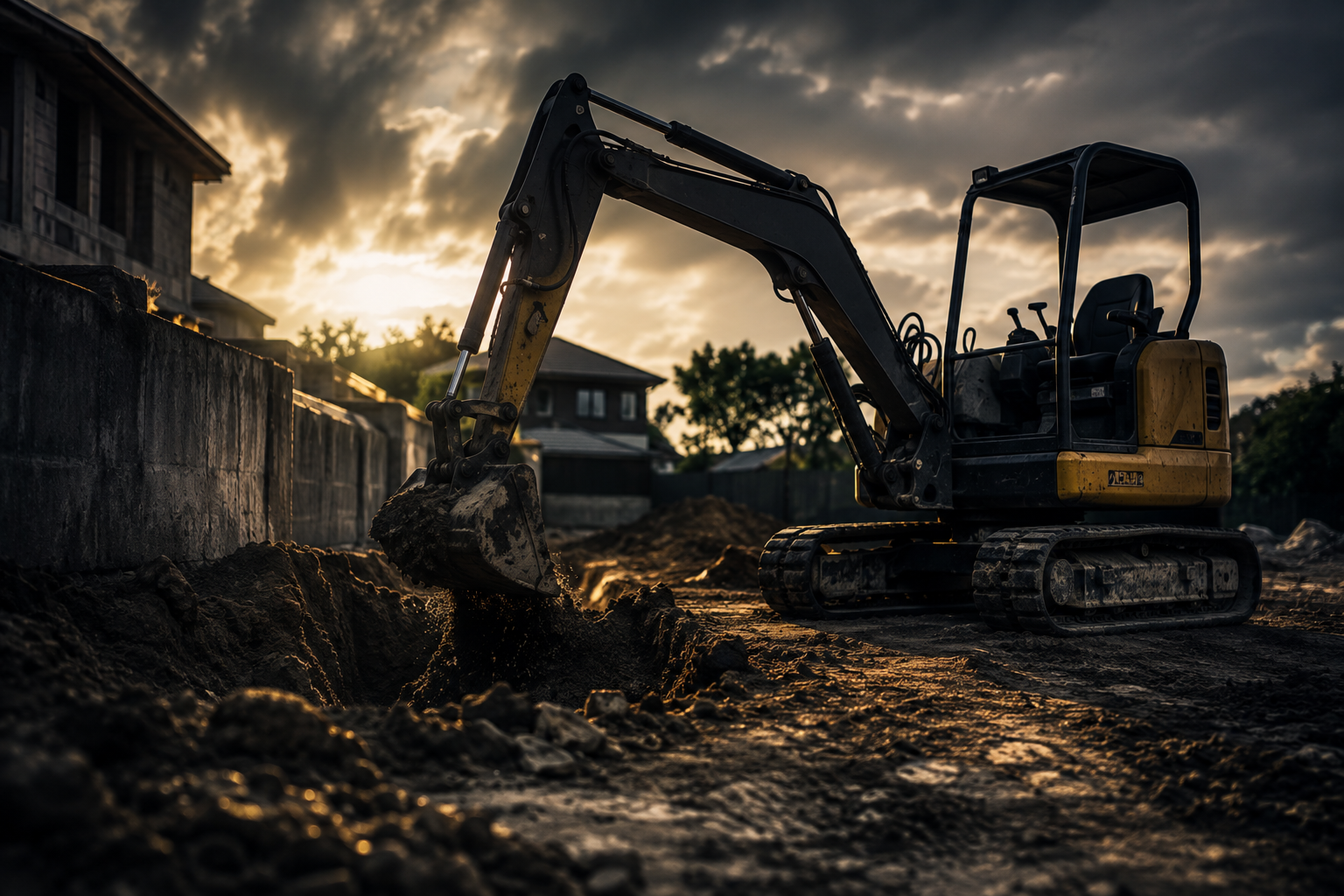
"Don't let brand loyalty drain your profits. Compare mini excavators and skid steers based on performance, not nameplates, cut rental costs and boost efficiency."
Related reading: How to Streamline Equipment Procurement for Multiple Job Sites Without Managing Separate Rental Agreements, How to Rent Storm Cleanup Equipment After a Hurricane in 2026, and How to Rent and Set a Commercial Generator in 5 Steps.


Get the latest GoDizel content delivered straight to your inbox
Learn how to consolidate equipment procurement across multiple job sites. Stop managing separate rental agreements and optimize your fleet management today.
Learn how to rent storm cleanup equipment effectively in 2026. Follow our guide to secure essential restoration tools and prevent long-term property damage.
The most expensive mistake on a compact equipment jobsite is not choosing the wrong machine — it is choosing the wrong machine for the wrong reasons.
Brand loyalty in construction runs deep. Contractors who have run the same nameplate for a decade tend to default to it instinctively, often over-speccing a machine because that is simply what they know. The result is real cost: bloated rental rates, machines too wide for a 60-inch alley, and attachments that do not match the actual task on-site.
Spec-first procurement shifts that instinct. Instead of asking "who makes it," the smarter question is "what does this site actually demand?" A machine that clears a tight residential trench efficiently outperforms a flagship brand unit idling outside the access point. When you browse compact track loader options with specs front and center, the nameplate stops being the deciding factor.
The rental market reinforces this. Roughly 62% of contractors now prefer renting over purchasing to protect cash flow — and that volume of real-world use across fleets makes rentals the truest stress test of any brand's reliability. A machine that holds up across hundreds of rental cycles earns its reputation. One that does not gets pulled from rotation quietly.
That performance-over-nameplate thesis sets up a direct question worth examining: when you strip away brand loyalty and run a genuine kubota vs bobcat mini excavator comparison on the metrics that matter — hydraulic response, tail swing, attachment range — which one actually fits your next job?
Hydraulic smoothness is where Kubota consistently earns its reputation. Kubota's load-sensing hydraulic systems are engineered for fine motor control, which matters enormously on precision trenching work—utility corridors through landscaped properties, foundation drainage near existing footings, or fiber conduit runs in tight residential lots. Industry performance reviews and operator field tests frequently cite Kubota machines for their feedback quality, particularly the fluid, predictable response between joystick input and bucket movement. That kind of control is not a luxury on tight sites; it is the difference between a clean trench wall and a collapsed one.
Choosing between Kubota and Bobcat for mini excavator work is not a brand decision — it is a jobsite geometry decision.
The previous section made the case that brand loyalty often overrides practical performance data. Nowhere is that gap more costly than in the mini excavator category, where two machines from different manufacturers can produce dramatically different outcomes on the same trench line.
Hydraulic smoothness is where Kubota consistently earns its reputation. Kubota's load-sensing hydraulic systems are engineered for fine motor control, which matters enormously on precision trenching work — utility corridors through landscaped properties, foundation drainage near existing footings, or fiber conduit runs in tight residential lots. Kubota machines are frequently cited for operator feedback quality, particularly the fluid, predictable response between joystick input and bucket movement. That kind of control is not a luxury on tight sites. It is the difference between a clean trench wall and a collapsed one.
Bobcat's advantage, on the other hand, shows up on demolition and site-clearing work where raw attachment versatility drives productivity. Bobcat's auxiliary hydraulic flow rates and their broad compatibility with hydraulic breakers, compaction wheels, and auger drives give demo crews more options without swapping machines mid-job. And in a rental context, that attachment flexibility directly reduces your equipment count on site.
Zero-tail swing deserves its own mention because it is genuinely non-negotiable on urban residential framing projects. Working within six feet of a foundation wall, a fence line, or a parked vehicle eliminates the margin for error. A conventional-tail machine creates swing risk that zero-tail swing units eliminate entirely — and both Kubota and Bobcat offer competitive options in this configuration for that reason.
The micro-excavator niche is also shifting. Electricians and low-voltage contractors are moving away from full-sized units toward sub-2-ton machines because they fit through standard gate openings, cause minimal turf disruption, and require no CDL for transport. This trend is worth tracking, especially as the broader skid steer and track loader market — including john deere vs kubota skid steer performance comparisons — continues to push contractors toward right-sized equipment over brand-default choices.
Winner by Use Case
Kubota — Precision trenching, hydraulic sensitivity, tight residential excavation
Bobcat — Attachment versatility, demolition site clearing, multi-task crews
The excavator conversation is really just the starting point. Once you move from digging to loading and material handling, the machine category shifts entirely — and so does the performance math, which is exactly where skid steers and compact track loaders take center stage.
When contractors debate John Deere versus Kubota in the skid steer and track loader category, the answer almost always comes down to what the machine is loading — and what it is rolling over.
The Kubota-versus-Deere conversation builds naturally on the mini excavator framework covered earlier. Both brands produce capable compact equipment, but their engineering priorities diverge in ways that matter significantly at the jobsite level.
Lift path is where John Deere earns its reputation in skid steer and CTL work. Deere machines predominantly use a vertical lift path, which keeps the bucket closer to the cab during the arc of the lift. In practice, this geometry gives you better reach over the side walls of a high-sided dump truck — a meaningful advantage on sites where fast truck-loading turnaround drives the schedule. Kubota's radial lift path, by contrast, tends to deliver more breakout force at mid-range heights, which works better for grading and scraping than for overhead loading.
Ground pressure is where Kubota's track loader engineering stands out. Kubota CTLs are built with wider undercarriage configurations that distribute machine weight efficiently, making them a preferred choice for landscaping, turf restoration, and finish grading on sites where rutting is unacceptable. If you are weighing the tradeoff between flotation and raw pushing power, ground pressure considerations deserve a close look before you book either machine.
The broader CTL surge is hard to ignore. Compact track loaders led the compact construction equipment market in 2024 with a 35.45% market share, which signals that contractors across segments are choosing tracked versatility over wheeled speed. That shift is not purely about traction — it reflects CTLs' ability to handle the widest range of attachment work across soil types and seasons.
Uptime, particularly on multi-week rentals, is where maintenance intervals become a financial variable rather than a footnote. Deere's larger dealer network in many U.S. regions means faster access to filters, hydraulic fluid, and track tension service. Kubota machines are known for longer standard service intervals on some models, which can reduce mid-rental downtime on remote or rural sites. Neither brand dominates here universally — the determining factor is often which dealer is within 30 miles of your project.
Discussions about best mini excavator brands ranked alongside track loaders often treat brand as the primary variable. The real variable is always the task profile. Choosing on lift path geometry, ground pressure tolerance, and dealer proximity will outperform choosing on logo every time. And once you have the right machine spec locked down, the next question — what that rental actually costs when all fees are counted — deserves the same level of scrutiny.
The sticker price on a rental quote is one of the most misleading numbers in construction procurement — and building your equipment decisions around it is costing you more than brand loyalty ever could.
Any honest compact track loader comparison eventually runs into the same wall: two units with nearly identical day rates arrive at the jobsite with wildly different actual costs once you account for everything the quote did not mention. Understanding what drives that gap is where real project margin gets protected.
Hidden fees are the most common culprit, and they tend to cluster in predictable places:
Delivery and pickup charges — often quoted separately, sometimes not quoted at all until the invoice arrives
Fuel surcharges — applied as a percentage of the base rate and subject to fluctuation mid-rental
Damage waivers — presented as optional but frequently added by default, sometimes adding 10–15% to the total
Cleaning fees and late return penalties — buried in rental agreements that project managers rarely have time to read line by line
Manual procurement compounds the problem in a way that never shows up on any invoice. When a project manager spends two to three hours calling rental yards, comparing verbal quotes, and chasing confirmations, that labor cost is real — it is just absorbed invisibly into overhead. Across a busy construction season, those hours accumulate into a significant drag on efficiency that no equipment brand, however reliable, can offset.
That shift is already happening at scale. Digital rental transactions in construction equipment reached approximately 43% of total rental bookings in 2024, a figure that reflects how aggressively the industry is moving to resolve exactly this kind of invoice friction. Platforms that centralize availability, surface real pricing, and eliminate the back-and-forth phone loop are compressing what used to take hours into minutes — and giving project managers time back to manage the actual job.
The economics of total landed cost reframe the entire brand loyalty debate. Once you account for delivery logistics, surcharge structures, and procurement time, the machine that fits the work and ships cleanly often outperforms a preferred brand on a more complicated rental terms. That calculus becomes even more precise when the job calls for something highly specialized — which is exactly where right-sizing the unit to the task matters most.
Choosing the wrong machine size does not just slow a job down — it creates safety exposure, utility strike risk, and rework that erases any savings from grabbing whatever was available.
Brand familiarity tends to push contractors toward the same 3.5- to 5-ton mini excavator they have always rented, even when the task calls for something smaller and more precise. For specialized trades, the size decision often matters more than the brand decision.
Precision trenching for utility lines is where micro-excavators — typically under 2,000 pounds — earn their keep. These machines fit through standard gates, work in crawl spaces, and reduce surface disturbance around existing infrastructure. When you are laying conduit, fiber, or water lines in a developed yard or near a building foundation, a micro-unit gives operators far more control than a conventional mini. Evaluating mini excavator rental cost against a micro-unit rental often reveals a smaller price gap than expected, especially on jobs where a larger machine requires a spotter or causes collateral damage.
Zero-tail-swing geometry becomes critical the moment a wall, fence, or existing structure enters the work zone. A standard mini excavator swings its counterweight beyond the tracks during rotation — fine in open ground, dangerous against a wall. Zero-tail-swing models keep all movement within the track footprint, which protects structures and keeps operators out of OSHA-reportable situations without sacrificing dig depth.
Hydro-excavation and vacuum trailers add a layer of protection that no machine operator alone can provide. Pairing a micro-excavator with a vacuum trailer for soft-dig verification before mechanical excavation is a standard practice on utility-dense sites. It is not the fastest approach, but a single utility strike can cost more in repairs, downtime, and liability than an entire week of rental fees.
Safety bundles — renting a trench box or hydraulic shoring alongside the excavation machine — round out a properly spec'd utility package. Any trench deeper than 5 feet in unstable soil requires protective systems under OSHA 1926 Subpart P, and coordinating that equipment alongside the machine from a single source simplifies logistics considerably. Thinking through the full equipment bundle before you commit to a rental is exactly the kind of procurement discipline that the next section will help you structure into a repeatable decision process.
The single most expensive equipment decision you can make on a jobsite is defaulting to a familiar brand when the specs do not actually match the work.
By this point in your evaluation process, the pattern should be clear: brand loyalty is a shortcut that often misdirects budget, delays timelines, and introduces unnecessary risk. The good news is that a more disciplined selection process does not require more time — it requires a better framework.
Site footprint comes first. Before you contact a single yard, confirm your access constraints, utility depth requirements, and surface conditions. A micro excavator rental pulled from a familiar supplier may sit idle for a day because it cannot fit through a 36-inch gate — while a lesser-known unit from a local independent yard would have cleared it without issue. Match the machine to the site, not to the logo on the door.
Total landed cost is non-negotiable. As covered earlier, delivery fees, protection plans, and fuel surcharges can shift a "cheaper" quote by 20% or more. Run those numbers fully before committing.
Availability across a broad inventory pool changes the math. Digital marketplaces that aggregate thousands of machines in real time give you comparative leverage that a single phone call to a preferred yard simply cannot. Comparing specs across brands becomes far more actionable when you can simultaneously check what is actually available within your delivery radius.
Weekly rates reward longer commitments. For projects extending beyond four or five days, weekly pricing structures consistently lower the effective per-day cost — often significantly. Lock in that rate early, and you protect your budget from mid-project availability crunches.
The contractors who source smarter are not spending more time on the phone. They are spending less — because they have stopped calling yards one by one and started letting real data make the first cut.
The single biggest inefficiency left in compact equipment procurement is not the machine — it is the phone call you make before you rent it.
Contractors who still work the phones to gather quotes are operating on relationships and memory rather than data. That approach made sense when digital options were thin. In 2024, it is simply leaving money on the table. Digital rental platforms captured approximately 43% of all construction equipment rental transactions that year — a signal that the industry has already voted with its workflow. The era of invoice drama, where a verbal quote becomes a disputed line item on delivery day, is ending for contractors who have shifted to AI-driven checkout with documented pricing built in.
Real-time price comparison is not a convenience feature — it is a competitive advantage. When you can see availability, specs, and rates across multiple suppliers in a single interface, you stop defaulting to brand familiarity and start making decisions the way the jobsite actually demands: by capability, not habit. A machine that matches your dig depth, your swing radius, and your site access window is worth more than a familiar decal on the cab.
The transition from manual yard calls to a centralized digital interface tends to happen fast once contractors experience it once. The friction drops, the paper trail improves, and the spec-matching becomes deliberate rather than reactive. And that is exactly the shift this entire article has been building toward — let the jobsite specs dictate the brand, not the other way around.
Browse available compact equipment on Dizel and compare real inventory against your actual project specs before you make the next call.
performing a micro excavator rental evaluation often reveals that smaller units can save thousands in restoration costs and labor hours. While the base mini excavator rental cost might be lower for a larger, more common unit, the 'total landed cost'—including transport and site repairs—frequently favors the specialized machine.
The shift from brand loyalty to spec-first procurement is a necessity for maintaining margins. Whether you are running a kubota vs bobcat mini excavator comparison or analyzing john deere vs kubota skid steer performance, the data clearly shows that the 'best' machine is always the one that matches the site's unique constraints.
In the best mini excavator brands ranked for ROI, the winner is the one that minimizes downtime and maximizes maneuverability. Prioritizing a compact track loader comparison based on ground pressure and lift path ensures your fleet supports your bottom line, not just your brand preference. Focusing on these metrics turns equipment from a legacy expense into a strategic competitive advantage.
working in congested urban environments, the ability to maneuver a micro excavator rental inside a structure or through a narrow side yard eliminates hours of manual digging. These units are increasingly the standard for electricians and plumbers who need to navigate tight utility corridors without the risk of damaging existing lines.
Mini excavator rental cost also varies significantly by weight class. While a 5-ton machine offers more power, its total landed cost — including specialized transport and higher fuel consumption — often exceeds the budget for a job that a 1.5-ton unit could have handled with better agility. Right-sizing is the final step in moving from brand-first to spec-first procurement.
The decision to rent equipment should not be a reflex based on a logo. Whether you are conducting a kubota vs bobcat mini excavator comparison for a residential trench or weighing john deere vs kubota skid steer performance for a large-scale grading project, the jobsite data should lead the way.
By prioritizing hydraulic precision, lift path geometry, and true landed cost over brand familiarity, contractors can protect their margins and improve safety. In a market where efficiency is the only sustainable competitive advantage, the "best" brand is always the one that gets the specific task done with the least amount of waste.