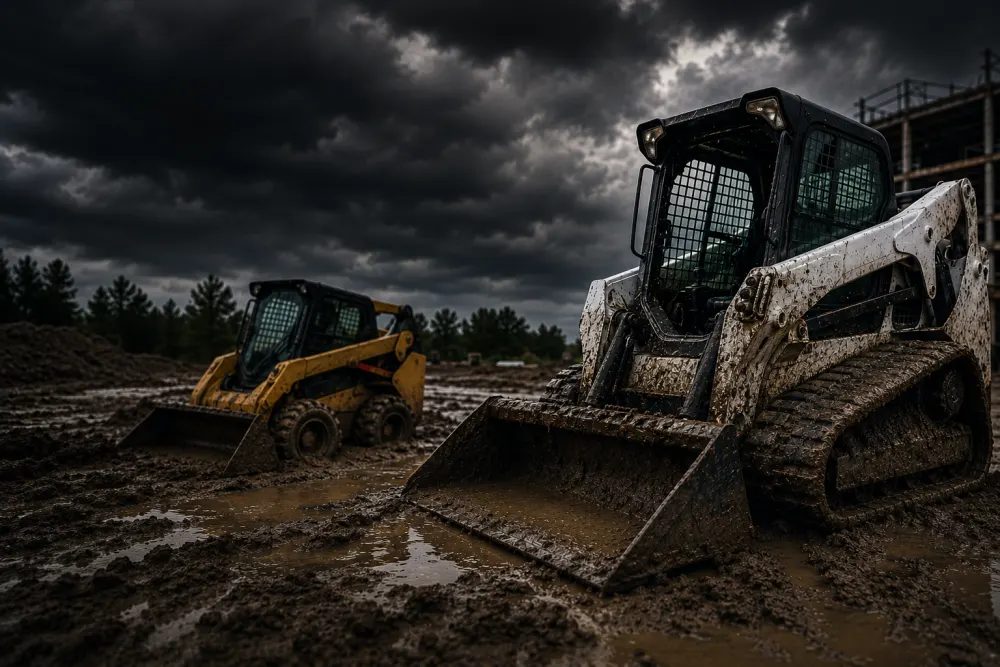
"Skid steer or compact track loader for a muddy site? One sinks, one works. Here's the ground pressure math and when each machine makes sense."
I once watched a wheeled skid steer sink to its axles in a Houston job site after two days of rain. The crew spent half the morning pulling it out with a dozer, and the machine spent the rest of the week parked. The compact track loader on the same site never stopped working.
That's the answer in one story: for muddy sites, rent the compact track loader. But the full picture is worth understanding, because tracks are not always the right call, and they're not free.
The difference comes down to ground pressure. A wheeled skid steer concentrates its weight on four small tire contact patches, often 30 pounds per square inch or more. A compact track loader spreads the same weight across long rubber tracks, dropping ground pressure to around 4 to 6 psi. That's the difference between a machine that floats over soft ground and one that digs itself a grave.
On wet clay, fresh grade, sand, or any site that hasn't dried out, a CTL keeps pushing, keeps lifting, and keeps its traction. It also tears up finished surfaces far less, which matters if you're working near landscaped areas or on a site that needs final grade protected.
In Florida and along the Texas Gulf Coast, where afternoon storms can turn a site into soup in twenty minutes, a lot of contractors I know have simply stopped renting wheeled machines for dirt work entirely.
So why does anyone rent wheeled skid steers? Three reasons.
First, cost. Skid steers typically rent for 15 to 25 percent less than a comparable CTL, and tire repairs cost far less than track repairs. Second, speed and pavement. On concrete or asphalt, wheels are faster, more maneuverable, and don't wear expensive rubber tracks against abrasive surfaces. Third, hard-surface work like demolition cleanup, pallet handling, and warehouse jobs. Tracks on pavement all day is money grinding away beneath you.
The quick rule I share: if the machine will spend most of its time on dirt, especially wet dirt, get tracks. If it lives on pavement, get wheels.
Here's the math that convinces people. Say the wheeled machine saves you $150 a week in rental cost. One stuck machine costs you an hour of crew time, maybe a recovery machine, and lost production for the rest of the day. One rain delay where the wheeled machine can't work but a CTL could puts you a full day behind. On a project with a schedule, that $150 in savings evaporates the first time the sky opens up.
I've never heard a contractor complain they rented tracks and didn't need them. I've heard plenty complain the other way around.
Ground pressure: CTL wins by a wide margin in mud and soft soil. Rental price: skid steer is cheaper by 15 to 25 percent. Pavement work: skid steer, no contest. Grading and dirt work: CTL delivers a smoother, more stable ride and better pushing power. Wet weather uptime: CTL keeps working days the wheeled machine sits.
Ask yourself two questions. What surface will this machine sit on 80 percent of the time? And what happens to my schedule if it rains?
If either answer points to soft ground, rent the compact track loader and consider the price difference cheap insurance. If you're bouncing between surfaces on a long project, some contractors rent one of each and keep the CTL on dirt duty.
When you're comparing skid steer and compact track loader rentals, Dizel lets you check availability, compare machines, and get equipment delivered straight to your site, rain or shine.


Get the latest GoDizel content delivered straight to your inbox
What's really in an equipment rental agreement? The six core terms, what damage waivers cover, and the fine print that costs renters most.
Using a skid steer 10 times a year? The rent vs. buy math is closer than you think until depreciation shows up. Here's the honest breakdown.