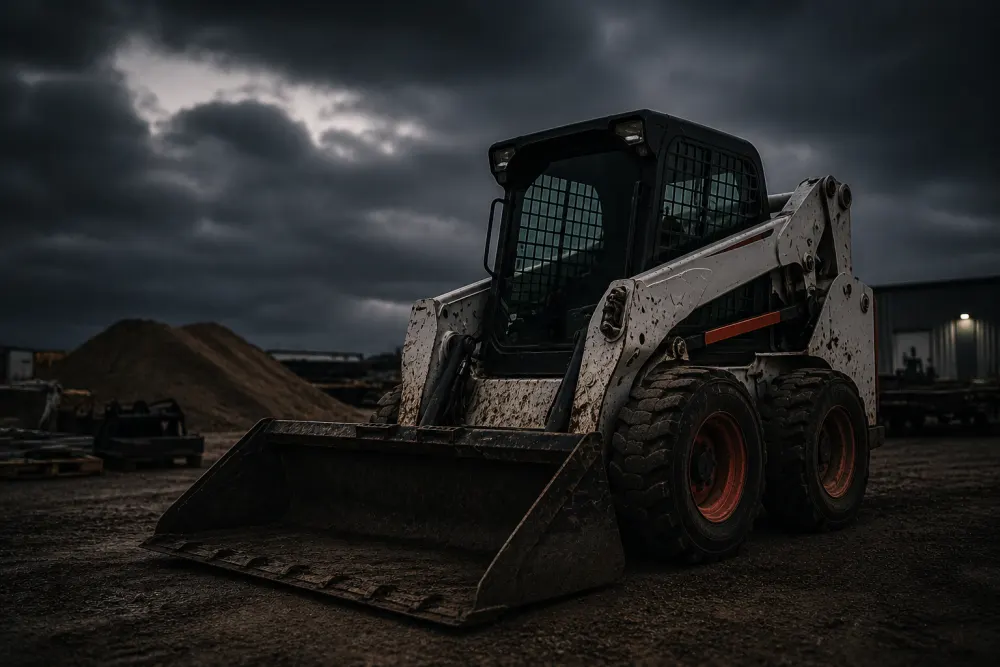
"Using a skid steer 10 times a year? The rent vs. buy math is closer than you think until depreciation shows up. Here's the honest breakdown."
Related reading: Choosing Between a Scissor Lift and a Boom Lift for Your 2026 Project, How to Rent the Right Lift for Warehouse Security Camera Installation, and How to Streamline Equipment Procurement for Multiple Job Sites Without Managing Separate Rental Agreements.


Get the latest GoDizel content delivered straight to your inbox
Struggling to choose between a scissor lift and a boom lift? Learn the key differences to pick the perfect aerial lift for your 2026 construction project.
Learn how to rent the right lift for warehouse security camera installation in 2026. Compare scissor and boom lifts to meet OSHA safety requirements.
A landscaper I know bought a used skid steer because he was "tired of renting." Eighteen months later it needed a set of tires, an hour meter's worth of maintenance, and a place to live between jobs. He added it all up over coffee one morning and said something I've repeated ever since: "I didn't buy a machine. I adopted one."
If you're using a skid steer about 10 times a year, here's the honest math.
At 10 uses a year, renting almost always wins on pure cost. Ownership starts making sense somewhere around 60 to 70 percent utilization, which means the machine earns its keep working 25 to 30 weeks a year, not 10. But the full picture has some wrinkles worth knowing before you decide.
Say each of your 10 uses is roughly a week. A decent skid steer rents for around $1,000 to $1,500 per week delivered. Ten weeks a year puts you at $10,000 to $15,000 annually, with zero maintenance, zero storage, zero insurance on the machine, and a fresh, dealer-maintained unit every time. When it breaks, the rental company swaps it. When the job needs tracks instead of wheels, you rent tracks. That flexibility is worth more than people give it credit for.
A new skid steer runs $40,000 to $70,000 depending on size and spec. A clean used one might be $25,000 to $40,000. Now add the costs that don't show up on the price sticker: financing interest, insurance, registration, a trailer if you don't have one, tires or tracks that wear regardless of use, fluids and filters, storage space, and depreciation, which is the big quiet one, thousands per year whether the machine works or sits.
Realistic all-in ownership cost for a lightly used machine often lands at $12,000 to $18,000 a year once depreciation and interest are counted honestly. For 10 weeks of actual work. That's $1,200 to $1,800 per working week, which is the same or more than renting, except now you also own every repair bill.
I'm not anti-ownership. Buying starts winning in a few situations. If your usage is growing and 10 times this year looks like 25 next year, buying gets ahead of that curve. If your uses are short and scattered, a dozen half-days where delivery fees would eat you alive, owning something small might pencil out. If you're far from rental suppliers and availability is unreliable, ownership buys certainty. And some contractors simply win bids because they can mobilize same-day, which has value a spreadsheet won't show.
There's also the middle path more people should consider: rent-to-purchase agreements. Many suppliers apply a portion of rental payments toward a purchase, which lets your utilization prove itself before you commit.
Don't ask "how many times a year do I use it?" Ask "how many weeks a year does it earn revenue?" A machine that works 10 weeks and sits 42 is a $50,000 lawn ornament with a payment book. A machine that works 30 weeks is a business asset.
At 10 uses a year, rent. Put the capital you didn't spend into things that grow the business, and let the rental company own the depreciation, the maintenance, and the storage problem.
When one of those 10 jobs comes up, Dizel makes it fast to compare skid steer rental rates and availability near you and get the machine delivered to the site, no payment book required.

