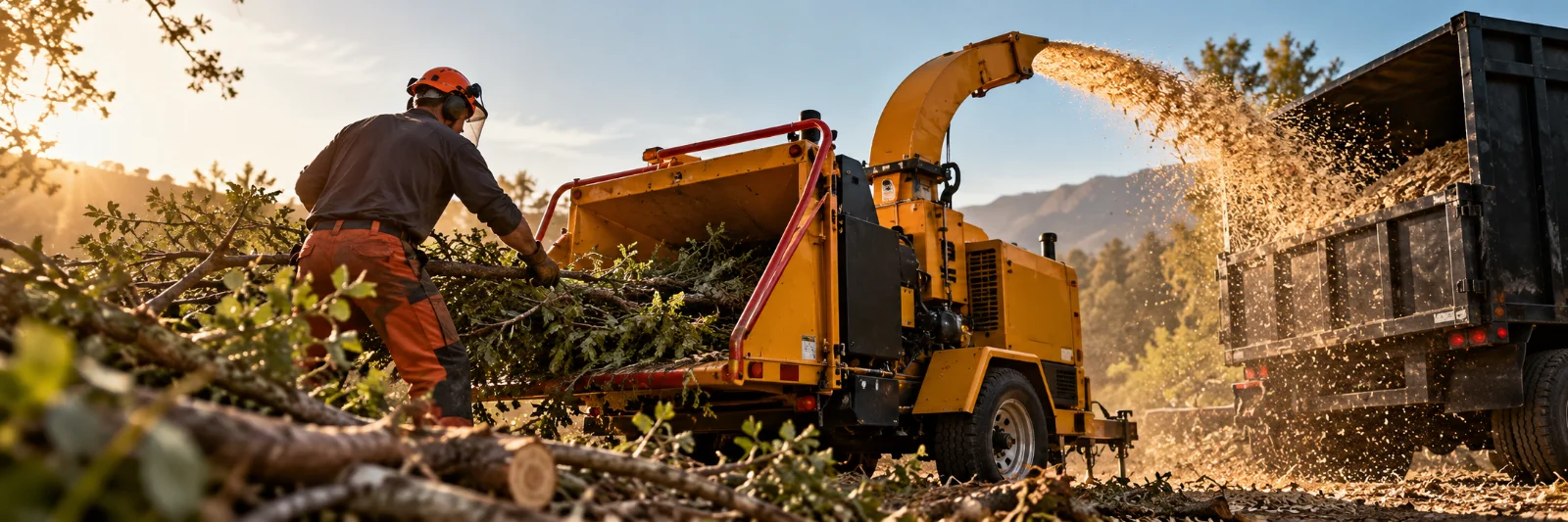
"Need a wood chipper rental? Learn how to choose the right size and specs for your job site, compare rental rates, and find the best equipment for 2026."
Related reading: Choosing Between a Scissor Lift and a Boom Lift for Your 2026 Project, How to Rent the Right Lift for Warehouse Security Camera Installation, and How to Streamline Equipment Procurement for Multiple Job Sites Without Managing Separate Rental Agreements.


Get the latest GoDizel content delivered straight to your inbox
Struggling to choose between a scissor lift and a boom lift? Learn the key differences to pick the perfect aerial lift for your 2026 construction project.
Learn how to rent the right lift for warehouse security camera installation in 2026. Compare scissor and boom lifts to meet OSHA safety requirements.
A tree chipper is a high-torque processing machine built to turn tree debris into manageable chips. That's its primary function. The gap between a light-duty tree shredder rental — the kind that handles yard trimmings — and a commercial brush chipper rental built for storm cleanup is enormous, and picking wrong costs you a day.
Most contractors still source these by calling yards one at a time and hoping someone picks up. Comparing real-time availability and pricing in one place removes that friction. Start the decision with two numbers: how much material you have, and how thick the biggest piece is.
Capacity means throat size. A wood chipper 6 inch unit eats brush and limbs. A wood chipper 12 inch machine handles whole-tree work.
Drum chippers handle large logs with brute force. Disc chippers run cleaner and produce more uniform chips for mulch use.
Follow the 80% rule: rent a machine rated roughly two inches larger than your thickest branch. Jams cost more in downtime than the upsize costs in rent.
Confirm these before anything shows up on a trailer:
Weight. A 12-inch towable chipper can run past 5,000 lbs loaded. That's a 3/4-ton truck territory — an F-250 class or heavier.
Hitch type. Larger units often use a pintle hitch, not a ball. Ask which one and match it before delivery day.
Brakes. Heavy towable units need a functional electric brake controller in the tow vehicle. Without a controller, towing is not legal.
Chipper pricing stacks in tiers — daily, weekly, monthly — and the published day rate is rarely what hits your invoice. Delivery, fuel surcharges, environmental fees, and the damage waiver all land as separate line items. Build those into your estimate or they come straight out of margin.
The bigger trap is utilization. A three-day rental frequently prices within a few dollars of a full week, which means contractors routinely pay for seven days and use three. If the job has any chance of stretching, price the week before you commit to the day rate. Know the cost to rent a wood chipper all-in, not headline-only.
A small wood chipper rental in the 6-inch class generally runs $200 to $350 per day. A 15-inch industrial wood chipper rental sits closer to $450 to $600 daily.
Most yards pivot to weekly billing around the fourth day, so days five through seven often ride free. Spring is peak clearing season — availability tightens, premiums appear, and the machine you wanted is already on another crew's trailer.
Urban yards usually quote a flat delivery zone. Rural job sites get billed by mileage, and it adds up fast on a two-way haul.
Time the drop-off to your crew's arrival, not the yard's convenience. A chipper sitting idle at 7 a.m. is still billing.
Fuel policy matters too: "return full" is standard, and pre-paid fuel options almost always price above pump rate.
Chippers fail in predictable ways. Dull knives, clogged discharge chutes, and bogged engines account for most lost hours on site, and nearly all of them trace back to how the machine was fed rather than how it was built.
Know the ceiling, too. A brush chipper processes limbs and trunks within its throat rating. Once you're dealing with stumps, root balls, or mixed demolition debris, you need a horizontal grinder or a tree stump grinder rental instead — forcing the wrong machine is how bearings die.
PPE includes more than just gloves. Face shield, hearing protection, close-fitting sleeves, and steel-toe boots. No loose drawstrings near the feed table, ever.
Stringy output means the knives are dull. Chips should break clean; frayed ribbons mean it's time to flip or sharpen the blades.
Auto-feed stalling on oak or other hardwood usually means feed sensitivity is set too aggressive. Back it down and let the engine recover between bites.
New vibration is a stop-work signal. Check for loose bolts or debris lodged in the drum before it turns into bearing failure.
Avoid painted, pressure-treated, or nail-embedded wood as it can damage knives and incur charges. Chip clean material only.
Soft residential lawns are unsuitable for a 5,000-lb towable. Plan mats or track protection, or you're repairing turf on your own dime.
And when the pile is mostly large-diameter trunk wood, hauling logs out whole is often cheaper than feeding them one at a time.
Compare equipment on four specs: horsepower, feed rate in feet per minute, fuel consumption, and throat capacity. Those four predict almost everything about how a machine performs on a real site.
Throughput follows horsepower. A compact unit produces a steady trickle of mulch; a high-capacity drum machine fills a chip truck in a fraction of the time, which changes how many hauls your crew makes.
Material matters as much as size. Fibrous stock — palm fronds, willow, bamboo — wraps and binds in machines that handle oak or pine without complaint. Size up for anything stringy.
Compact chippers (under 50 hp): light brush and 4- to 6-inch limbs. The right call for landscape cleanup and tight residential access.
High-capacity units (100 hp and up): 12- to 15-inch logs, high-speed production, crews running continuous feed.
Tracked vs. towable: tracked machines reach backyards and slopes a trailer never will, but you'll need a transport plan. Towables move easily and stay on firm ground.
Consider man-hours versus machine-hours. A larger machine costs more per day but cuts crew time dramatically, and labor is usually the bigger number on the invoice.
Diesel units burn less under sustained load than comparable gas machines, which matters on multi-day clearing work.
Estimate chip volume before you start — mulch piles up faster than most crews plan for, and disposal is its own line item.
Contractors ask the same handful of questions before every clearing job: what it costs, what size to get, and what's actually included in the quoted rate. Below are direct answers.
One more worth covering upfront: insurance. Most yards require proof of general liability coverage for commercial rentals, and many offer a damage waiver as an add-on. The waiver typically covers accidental damage to the machine, not negligence, theft, or damage from running prohibited material through the drum. Read what's excluded before you decline it.
Expect roughly $200 to $600 per day depending on throat capacity and your regional market. Smaller units sit at the low end, industrial machines at the top. That range typically excludes taxes, environmental fees, delivery, and fuel — budget those separately.
For general landscaping and brush work, a 6-inch unit handles it. For professional tree removal, a 12-inch machine is the industry standard. Size up a class if you're processing fibrous material like willow or palm, which binds in smaller throats.
Usually not. Both are line-item additions. Delivery is priced by distance from the yard, flat-rate inside a zone and per-mile outside it. Fuel comes full and must come back full — refueling surcharges run well above pump price.
Size to the largest limb on the pile, not the average one. The oversized machine costs a little more and saves you an afternoon of clearing jams.
Verify tow rating, hitch type, and brake controller before the equipment arrives. Discovering a pintle mismatch at the yard burns half a day.
Price the week any time the job might run past three days. The four-day pivot means you're often buying seven days whether you use them or not.
Confirm site access and have PPE on the truck before the first branch goes in. High-production chipping leaves no room to improvise either one.
Pull the manufacturer's operation manual for your specific model — torque specs, feed settings, and lockout procedures vary by machine. Check local municipal guidelines on wood chip disposal and fire restrictions before hauling mulch anywhere. And get your crew through recognized brush chipper safety training before they run the feed table.

