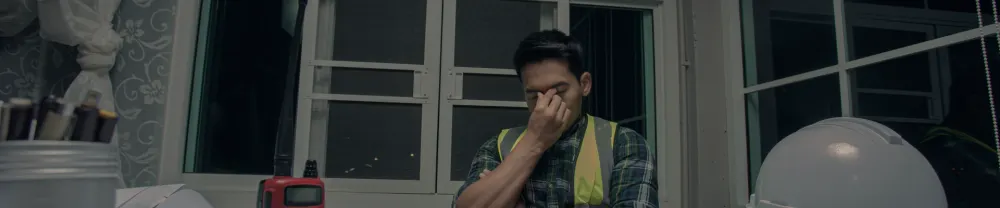
"If you’ve ever waited at 6 AM wondering if your rental will show, you know the feeling. The best rental partners don’t deliver machines, they deliver trust."
Related reading: Beyond the Search Bar: Why Agentic Shopping is the New Foundation for Equipment Rental in 2026, 8 Best Heavy Equipment Rental Platforms of 2026 Compared, and United Rentals vs. Competitors: Best Rental Options 2026.


Get the latest GoDizel content delivered straight to your inbox
Discover how agentic shopping is transforming construction equipment rental in 2026 by automating procurement and streamlining complex booking workflows.
Stop wasting hours on procurement. Discover the 8 best heavy equipment rental platforms of 2026 featuring AI-assisted booking and transparent all-in pricing.
Before I got into the rental side of the industry, I was a contractor. I know what it's like to wake up at 5:30 in the morning with your stomach in knots, wondering if the excavator you rented is actually going to show up at 7 like they promised.
I know the pressure of chasing bids where a single mistake in your equipment estimate can cost you the whole job. I know what it's like to manage margins so thin you can see through them. And I definitely know what it feels like to lose work, not because your crew couldn't handle it, but because something behind the scenes fell apart.
Maybe it was equipment that showed up late. Or broke down halfway through day two. Or turned out to be the wrong size for the gate you needed to get through.
Those experiences stuck with me. And they've completely shaped how I think about the rental business now that I'm on this side of the fence.
Because here's what I learned: Rental isn't just about having equipment and sending it out. It's about being the kind of partner that helps contractors win more jobs and execute them without losing sleep.
The question more rental companies should be asking themselves is simple: How can we actually help our customers win?
Think about the difference between a corner store and a business advisor.
The corner store? You walk in, ask for what you need, pay, and leave. It's transactional. Nobody's asking why you need it or what you're trying to accomplish. They just hand you the thing and move on to the next customer.
A strategic partner? They ask questions. They understand your goals. They anticipate what you'll need next. They help you avoid problems before they happen.
When I was contracting, I didn't need another phone number to add to my contacts list. I needed someone who understood the rhythm of construction work. Someone who could look at a job and say "you're probably going to need X on Thursday" before I even thought of it. Someone who made sure equipment wasn't the weak link in my operation.
The best rental partners didn't just drop off machines. They helped us deliver.
That's the difference. And that's what I try to build into every rental system now: proactive thinking, job cycle awareness, and an obsession with reducing friction for the people doing the actual work.
Let me break down what worked for me as a contractor, and what I've seen deliver real results since moving to the rental side.
Picture a contractor named Tom. He's putting together a bid for a commercial site job. Needs excavation, grading, and some utility work. The GC wants a number by Friday.
Tom's doing math in his head: labor costs, materials, subcontractors, equipment. Every line item matters because he's competing against three other crews and the lowest responsible bid wins.
Here's where it gets tricky. If Tom guesses wrong about equipment costs or availability, his whole bid falls apart. Maybe he prices in a mini excavator for two weeks, but when he calls to book it, you tell him it's unavailable and he needs to upgrade to a larger machine. Now his numbers are off and he either loses margin or loses the job.
Contractors can't afford to guess.
Rental companies that offer reliable scheduling, transparent pricing, and clear equipment specs become a secret weapon during bid time. When Tom knows he can count on getting the exact machine he needs, when he needs it, at the price you quoted, he can submit a tighter estimate with confidence.
That's not just convenience. That's a competitive advantage.
Think of it like a restaurant with a supplier who always delivers fresh ingredients on schedule at a predictable price. The chef can plan the menu, price it accurately, and promise quality. That's how you run a business. Same logic applies here.
Let me tell you about the worst day I ever had as a contractor.
We had a foundation pour scheduled. Crew was on site at 6 AM. Concrete trucks were coming at 8. We needed a backhoe to finish some trenching before the pour started.
The rental company said the machine would be there by 7. By 7:30, nothing. I called. "Oh yeah, the driver's running behind, should be there by 8:30."
You know what happened at 8? The concrete showed up. On schedule. Because concrete companies don't mess around.
We had to hand dig the last trench with shovels while concrete trucks idled in the street. The GC was furious. The concrete company charged us waiting time. And guess whose name was on that schedule? Mine. Not the rental company's.
When a contractor's name is on the line, every delay or breakdown reflects on them, not on you.
I still remember that sick feeling in my gut. The anxiety of wondering if equipment would show up. The dread of explaining to a GC why we're behind. That kind of stress doesn't just ruin a day. It ruins relationships and costs future work.
Now that I'm running rental operations, I push our teams to treat every single delivery like our name is on the GC's schedule. If we say 7 AM, we mean 7 AM. If a machine breaks down, we fix it immediately or swap it out faster. No excuses. No delays.
That kind of reliability doesn't just save contractors time. It builds the kind of trust that turns one time rentals into long term partnerships.
Here's a story I love telling.
A contractor called asking for a skid steer for a residential backyard job. Standard request. We could've just said "sure, we've got one available" and sent it out.
But the guy on our team asked a few more questions. How wide is the gate? What's the ground like back there? What kind of work are you doing?
Turns out the gate was only 36 inches wide. A standard skid steer wouldn't fit. The ground was soft from recent rain. And the contractor needed to move a lot of material in a tight space.
So instead of sending what he asked for, we recommended a compact track loader with a narrower profile and better weight distribution. Saved him from a major headache and probably earned his business for the next five years.
Anyone can hand out a spec sheet. But if you understand how the work actually gets done, you become invaluable.
This is where rental companies truly stand out. Not by knowing every bolt on a machine, but by understanding jobsite realities. Is the operator experienced or brand new? Will that excavator sink in clay soil? Can the machine make it up that grade?
When you help a foreman avoid three problems before lunch, you've earned the next phone call. And the one after that.
It's like the difference between a doctor who just writes prescriptions and one who asks about your lifestyle, your stress, your diet. One treats symptoms. The other solves problems.
I'm all for technology. But I've also seen plenty of tech that looks impressive in a demo and turns into a nightmare in real use.
The best technology in rental isn't flashy. It's useful.
Usage tracking that helps align billing to actual project phases, so contractors aren't getting surprise invoices. Telematics that let you spot a hydraulic issue before it becomes a breakdown on site. Scheduling tools that actually match how contractors plan their work, not how software engineers think they should.
Think about a fitness tracker. The good ones don't just show you fancy graphs. They give you actionable insights: you're not moving enough, your sleep is off, here's what to change. That's helpful tech.
The bad ones? They overwhelm you with data you don't understand and features you'll never use.
If your tech makes a contractor's life easier, they'll tell everyone. If it makes things harder, they'll tell even more people.
Keep it simple. Keep it useful. And always ask: does this actually solve a problem, or does it just look cool?
Here's something I remind our teams constantly: Contractors aren't buying rentals. They're buying outcomes.
They want to finish jobs on time. Avoid delays. Stay under budget. Win the next bid. Sleep at night without worrying about whether your equipment is going to show up.
When I was contracting, I didn't lie awake thinking "I sure hope that excavator has low engine hours." I thought "I hope this job goes smooth so I can keep my crew working and land the next one."
That's the goal. That's always the goal.
If we help contractors achieve that outcome consistently, we become more than a vendor in their phone. We become a partner in their business. And that's what leads to loyalty, referrals, and growth on both sides of the relationship.
It's like having a great mechanic. You don't just go to them because they're cheap. You go because you trust them to keep your truck running, to be honest about what needs fixing, and to have your back when things go wrong.
If you've never stood in a muddy trench at 6 AM wondering if your rental is going to show up, you might underestimate how much stress we can cause as rental companies. Or how much value we can create when we get it right.
But if you build your business around making the contractor's job easier, truly easier, you'll never run out of customers.
Here's what I believe after being on both sides:
The best rental companies understand jobsite pressure and respond with urgency. They know that "we'll get there when we can" isn't good enough when concrete trucks are idling and labor is burning.
They make it easy to do business, not just rent equipment. Simple quoting. Clear communication. No surprises. No runarounds.
They help customers win work by showing up like professionals, not middlemen. They're consultants who happen to rent equipment, not equipment pushers who happen to answer phones.
The future of this industry isn't about who has the biggest fleet or the newest machines.
It's about who delivers the most impact on the job.
It's about rental companies that understand they're not in the equipment business. They're in the contractor success business.
Because when contractors win, we all win.
Act like you've been there. Act like you remember what it felt like to need reliable support. Act like every delivery, every phone call, every interaction matters, because to the person on the other end, it absolutely does.
That's how you build a rental business that doesn't just survive. That's how you build one that becomes indispensable.

