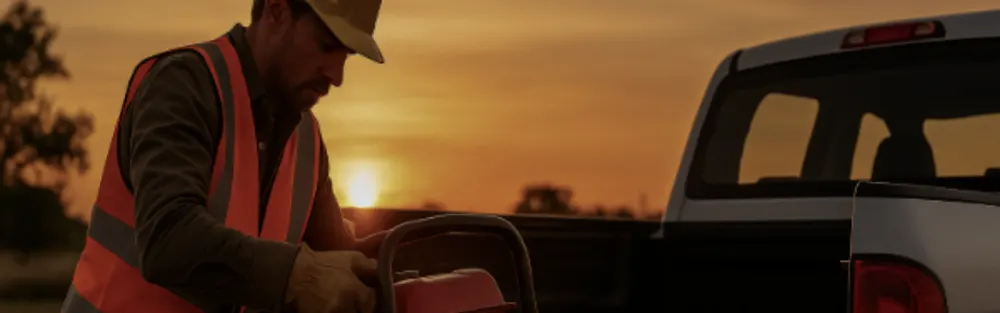
"I wasted $80K hiring skilled workers who didn't care. Here's the truth: you can train someone to run equipment. You can't train them to give a damn."
Related reading: Choosing Between a Scissor Lift and a Boom Lift for Your 2026 Project, How to Rent the Right Lift for Warehouse Security Camera Installation, and How to Streamline Equipment Procurement for Multiple Job Sites Without Managing Separate Rental Agreements.


Get the latest GoDizel content delivered straight to your inbox
Struggling to choose between a scissor lift and a boom lift? Learn the key differences to pick the perfect aerial lift for your 2026 construction project.
Learn how to rent the right lift for warehouse security camera installation in 2026. Compare scissor and boom lifts to meet OSHA safety requirements.
Let me tell you about the worst hiring decision I ever made. Actually, the worst three hiring decisions.
First guy had ten years of experience running equipment. His resume was perfect. References checked out. He knew every piece of machinery we owned better than I did.
He showed up late constantly. Left early when he thought nobody was watching. Treated company equipment like rental cars. When something broke, his first instinct was to hide it, not fix it.
I spent six months trying to coach him. Gave him chances. Talked about accountability and ownership. Nothing changed. Finally let him go.
Then I hired someone else with similar credentials. Same story. Different person, same problems.
Third time? You'd think I'd learn. Nope. Hired based on experience and skills again. Same disaster.
Those three hiring mistakes cost me roughly $80,000 in combined salary, lost productivity, damaged equipment, and the time I wasted trying to fix what couldn't be fixed.
Here's what I finally figured out: You can teach someone how to run an excavator. You cannot teach them to care.
Technical skills are trainable. Ambition, drive, ownership mentality? Those either exist or they don't. And if you hire people without those qualities hoping you can develop them, you're going to waste a lot of time and money learning the same lesson I did.
Think about a restaurant kitchen for a second.
You've got two types of line cooks. Both know how to cook. Both have the technical skills. But they're fundamentally different people.
Cook A does exactly what's required. Makes the dishes correctly when the ticket comes up. Cleans their station because the chef will yell if they don't. Shows up on time because that's the rule. But the moment they're not being watched? Quality slips. Shortcuts appear. They're thinking about the clock, not the food.
Cook B treats every dish like it's going to their own family. Notices when an ingredient isn't perfect and speaks up. Stays late to help others finish when it's busy. Sees a better way to do something and suggests it. They're not cooking for a paycheck. They're cooking because they take pride in the work.
Same kitchen. Same training. Same recipes. Completely different people.
Your construction crew works exactly the same way. The technical skills matter. But what separates good employees from great ones has nothing to do with what you can teach them.
There's fascinating research on this from organizational psychology. A study published in the Journal of Applied Psychology tracked over 5,000 employees across multiple industries over five years.
They measured two things: technical competence and what they called "psychological ownership" (basically, how much someone thinks and acts like an owner even though they're an employee).
The findings were brutal for traditional hiring practices:
Technical skills accounted for about 15% of job performance variation. Psychological ownership? It accounted for 47%.
Let me translate that: The person who cares is three times more valuable than the person who's merely skilled.
Another study from Harvard Business Review looked specifically at construction and skilled trades. They found that employees with high ownership mentality had:
The person who treats your equipment like it's theirs doesn't break it as often. Shocking, right?
But here's the kicker from that same research: When they tried training programs to increase ownership mentality in existing employees who didn't naturally have it, the success rate was less than 12%.
You can't train someone to care. They either do or they don't.
Most contractors hire backwards. They look at the resume first. Experience, certifications, skills. If those check out, they hire and hope the person's character is decent.
That's completely backwards.
Smart contractors hire for character first, skills second. Because skills are teachable. Character isn't.
Let me tell you about a contractor I know named Mike who runs a site work company in Virginia. He's built a crew that operates like they own the business. His equipment stays in better shape than most rental fleets. His guys catch problems before they become disasters. He has almost zero turnover.
Here's his hiring approach: He doesn't even look at resumes initially.
Instead, he brings candidates in for what he calls a "working interview." They spend half a day on site. Not doing skilled work necessarily. Just helping out. Moving materials. Cleaning equipment. Basic tasks anyone can do.
He's watching how they work when the work isn't prestigious.
Do they look for things to do or wait to be told? Do they handle tools and equipment with care or carelessness? Do they ask questions trying to understand the bigger picture or just go through motions? When something goes wrong, do they problem solve or complain?
Mike told me: "I can teach someone to run a skid steer in a week. I cannot teach them to give a damn. If they don't show up with that already built in, I'm wasting both our time."
In three years using this approach, he's had one bad hire. One. Before this? He was replacing people every six months.
Forget asking about their greatest weakness or where they see themselves in five years. Those questions produce rehearsed answers.
Here are the questions that actually reveal whether someone has ownership mentality:
People with ownership mentality have multiple stories ready. They notice things. They don't walk past problems thinking "not my department."
People without it? They struggle to come up with even one example. Or their story is clearly something they did because they got in trouble for not doing it.
Owner mentality person: "Obviously I put it away or at minimum let someone know."
Employee mentality person: "Well, it depends. Is it my tool? Whose responsibility is it?"
The person asking whose responsibility it is will never act like an owner.
People with ownership mentality own their mistakes. They tell you what they did wrong, how they fixed it, and what they learned.
People without it? They tell elaborate stories about how it wasn't really their fault. They had bad information. Someone else set them up to fail. The circumstances were unusual.
Victims blame. Owners learn.
This question is gold because it reveals their values.
Do they complain about not getting enough break time and having to work hard? Red flag.
Do they complain about waste, poor planning, or equipment not being maintained properly? Green flag. That person cares about efficiency and quality.
The things that bother people tell you what they value.
Here's what contractors get wrong constantly: overvaluing technical skills in hiring and undervaluing character.
I've trained people with zero construction experience to be productive crew members in 90 days. I've never successfully trained someone without drive to suddenly develop it.
Think about it like this: Technical skills are like software. You can install them, update them, upgrade them. Character is like the operating system. If the OS is corrupted, no amount of software will make it work right.
A study from the National Association of Home Builders looked at this specifically in construction. They tracked two groups of new hires:
Group A: Experienced workers with strong technical skills but average work ethic Group B: Inexperienced workers with no construction background but high drive and ownership mentality
After one year, Group B outperformed Group A in every measurable category. Productivity, quality, safety, attendance, everything.
After three years? Group B was running jobs. Group A was still doing the same work, many had left for slightly higher pay elsewhere.
The inexperienced people with drive lapped the experienced people without it.
Let me paint you two pictures of the same scenario.
It's Thursday afternoon. The crew is finishing up a drainage installation. Tomorrow they're moving to a different site.
Scenario One: Employee Mentality
Guy finishes his task. Checks the time. Still 20 minutes until quitting. He finds somewhere to look busy. When 4:30 hits, he's in his truck. Leaves equipment and tools for someone else to load in the morning. Not his problem. He did his job.
Scenario Two: Owner Mentality
Guy finishes his task. Looks around. Sees tools that need to be loaded. Sees equipment that should be cleaned. Sees tomorrow's site will go smoother if they prep a few things today. Spends that last 20 minutes setting everyone up for success tomorrow. Leaves when the work makes sense to leave, not when the clock says to.
Same person? No. Same training? Doesn't matter.
This is character, not skill. And character determines everything.
I know a foreman who told me this story. He had a helper who was constantly going above and beyond. Staying late not for overtime, but because it made sense. Maintaining equipment like it was his own. Looking out for efficiency everywhere.
The foreman asked him: "Why do you work like you own this company?"
The helper said: "I don't own this company. But I own how I show up every day. And I'm not going to show up half speed for anybody."
That's the person you want to hire. That's the person you can build a business around.
Here's the paradox that messes contractors up: The things you can train don't matter as much as the things you can't.
You can train:
You cannot train:
The trainable stuff is temporary competitive advantage. The untrainable stuff is permanent.
Think about sports. Every NBA player can shoot, dribble, and pass. Those are trainable skills. But the difference between a good player and a great one? Work ethic. Mental toughness. Leadership. Drive to win.
Phil Jackson, legendary basketball coach, famously said: "I can't make you care. I can only create an environment where people who care can thrive."
Same applies to construction crews.
You can create a culture that rewards ownership mentality. You can give people autonomy and responsibility that lets them act like owners. You can pay them well and treat them with respect.
But you cannot install drive and ambition in someone who doesn't have it. That has to be there when they walk in the door.
Okay, practical advice. How do you actually hire for ownership mentality instead of just hoping for it?
Stop writing job descriptions that list required skills and experience. Start writing descriptions that describe the character you're looking for.
Instead of: "5+ years operating excavators, CDL required, OSHA certification preferred"
Try: "We're looking for someone who treats equipment like they own it, notices problems before they become disasters, and takes pride in their work. We'll teach you everything technical. We can't teach you to care."
The people who read that and think "that's me" are exactly who you want applying.
First 90 days should be probationary, and you need to watch like a hawk.
Not their technical skills. Their character.
Do they show up on time consistently? Do they handle equipment with care? Do they clean up without being asked? Do they look for things to do? Do they take responsibility when they mess up?
If the answers are no, cut them loose. Don't fall for the sunk cost fallacy of "well, we already spent time training them."
Better to be short staffed with good people than fully staffed with people who will drag you down.
Here's a mistake I see constantly: paying everyone the same regardless of their contribution.
The guy who treats your equipment like garbage and does the bare minimum gets the same rate as the guy who runs your jobs like they're his own business.
That's insane. You're teaching your best people that extra effort doesn't matter.
Pay structure should reward ownership behavior:
When people see that thinking like an owner makes them significantly more money, you amplify the behavior you want.
This is the part most contractors miss. You hire people with ownership mentality, but then you treat them like children who need supervision.
If you want people to think like owners, you have to give them owner level responsibility and autonomy.
Let them make decisions. Let them manage budgets. Let them talk to clients. Let them solve problems without running everything through you first.
I know a contractor who gives every crew leader a monthly equipment maintenance budget. They manage it. If they come in under budget through good care and preventative maintenance, they keep 20% of the savings as a bonus.
His equipment maintenance costs dropped 35% in one year. His guys started catching problems early, maintaining things properly, and operating equipment in ways that extended its life.
Why? Because suddenly they had skin in the game.
Here's what happens when you build a team of people who think like owners:
They take care of equipment better, which means lower maintenance costs and less downtime. They work more efficiently, which means more jobs completed in less time. They solve problems independently, which means you spend less time putting out fires. They catch safety issues before they become incidents, which means lower insurance costs and fewer injuries.
And here's the beautiful part: They make everyone around them better.
High performers raise the standard for everyone. It's like a good basketball team. When you've got players who hustle, everyone hustles because nobody wants to be the lazy one.
But it works in reverse too. Low performers drag everyone down. If you tolerate someone who doesn't care, you're telling everyone else that not caring is acceptable.
Research from Stanford shows that one toxic team member can decrease overall team performance by 30 to 40%. One person.
Your weakest link doesn't just underperform. They make everyone else worse.
You cannot train ambition. You cannot install drive. You cannot teach someone to care.
Those qualities either exist or they don't. And they're far more important than any technical skill you can teach.
The contractors winning right now aren't the ones with the most skilled crews. They're the ones with crews full of people who think and act like owners even though they're employees.
That starts with hiring. Everything else is just hoping you can fix a foundation that was poured wrong.
Stop hiring for skills first and character second. Flip it. Hire people who care, who take initiative, who treat your business like it's theirs.
Then teach them everything else. Because everything else is teachable.
The person who shows up with drive and ownership mentality but zero experience? That's your future foreman. That's your future project manager. That's the person who stays with you for 20 years and builds your business alongside you.
The person who shows up with ten years of experience but no ownership mentality? That's a paycheck collector who will leave the moment someone offers them fifty cents more an hour.
Hire the operating system, not the software. You can install software. You cannot fix a broken OS.
That's how you build a team that thinks like owners. And that's the only kind of team worth building.

